
Most skincare routines begin after the tap has already been turned off. We think about cleanser ingredients, exfoliating acids, moisturizers, retinoids and sunscreen, but rarely question the water used to rinse all of those products from the skin. Filterbaby has built almost its entire identity around challenging that assumption.
Instead of presenting water filtration primarily as a drinking-water issue, Filterbaby treats bathroom water as part of the skincare environment. Its flagship Faucet Filter Pro attaches directly to a bathroom faucet, while the wider range extends the same idea to showers and showerheads. The proposition is simple: if chlorine, chloramine, sediment and other unwanted substances are touching your face every day, reducing that exposure may be a sensible addition to a skincare routine.
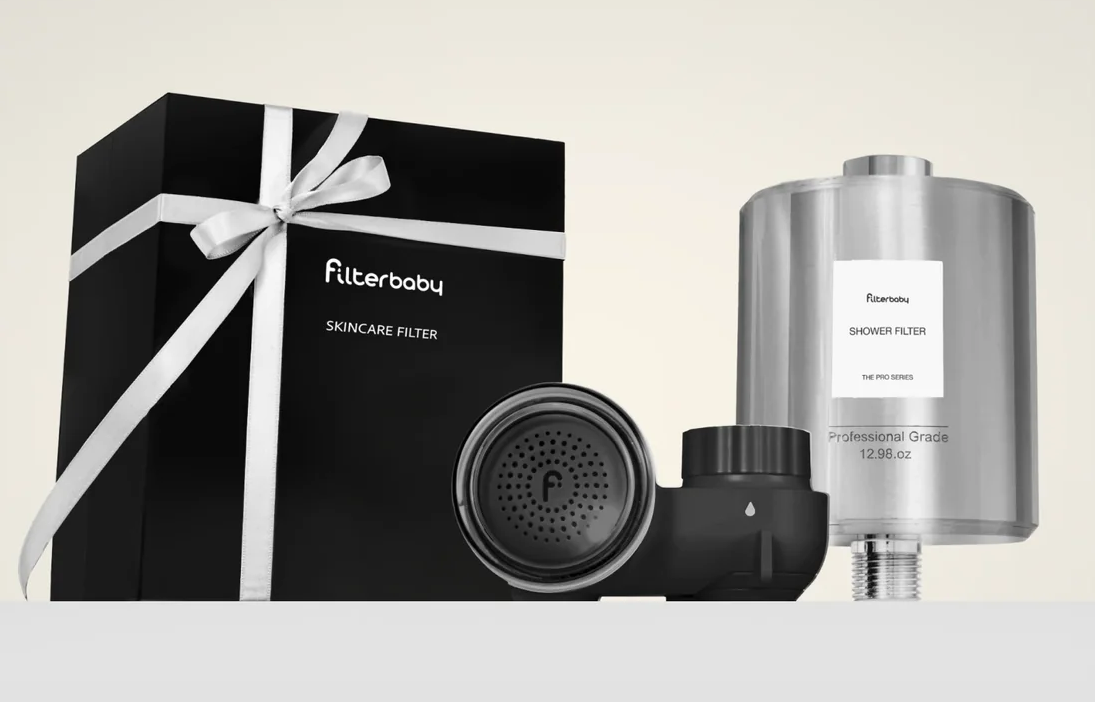
That idea is easy to market. The more important question is whether Filterbaby has enough filtration performance, testing and practical usability to justify turning another bathroom product into a recurring expense. After looking at the current filtration data, skin studies, product range, refill structure and independent owner feedback, the answer is more interesting than either “it clears acne” or “it is just an expensive faucet filter.”
Filterbaby appears strongest when treated as a well-engineered filtration product with skincare relevance, not as a replacement for dermatological care and not as a miniature whole-house water treatment system.
1. Filterbaby’s Big Idea: Your Most-Used Skincare Ingredient Is Water
Filterbaby's origin story is unusually relevant to the product instead of being merely decorative brand history. The company says cofounder Xin Shui comes from a family with three generations of experience in Traditional Chinese Medicine, later earned a master's degree in acupuncture, and had treated thousands of patients. According to the brand, her own dry and sensitive skin changed after moving homes, leading her and cofounder Lynn Shui to investigate tap water as one of the variables that had changed. Filterbaby was subsequently founded around point-of-use filtration for skin and hair.
The useful part of that story is not the suggestion that every skin problem begins with tap water. It clearly does not. Acne, eczema, rosacea, dryness and irritation can have many causes. The useful idea is that water is one of the few substances that may touch the face multiple times every day yet is rarely considered when someone is troubleshooting a routine.
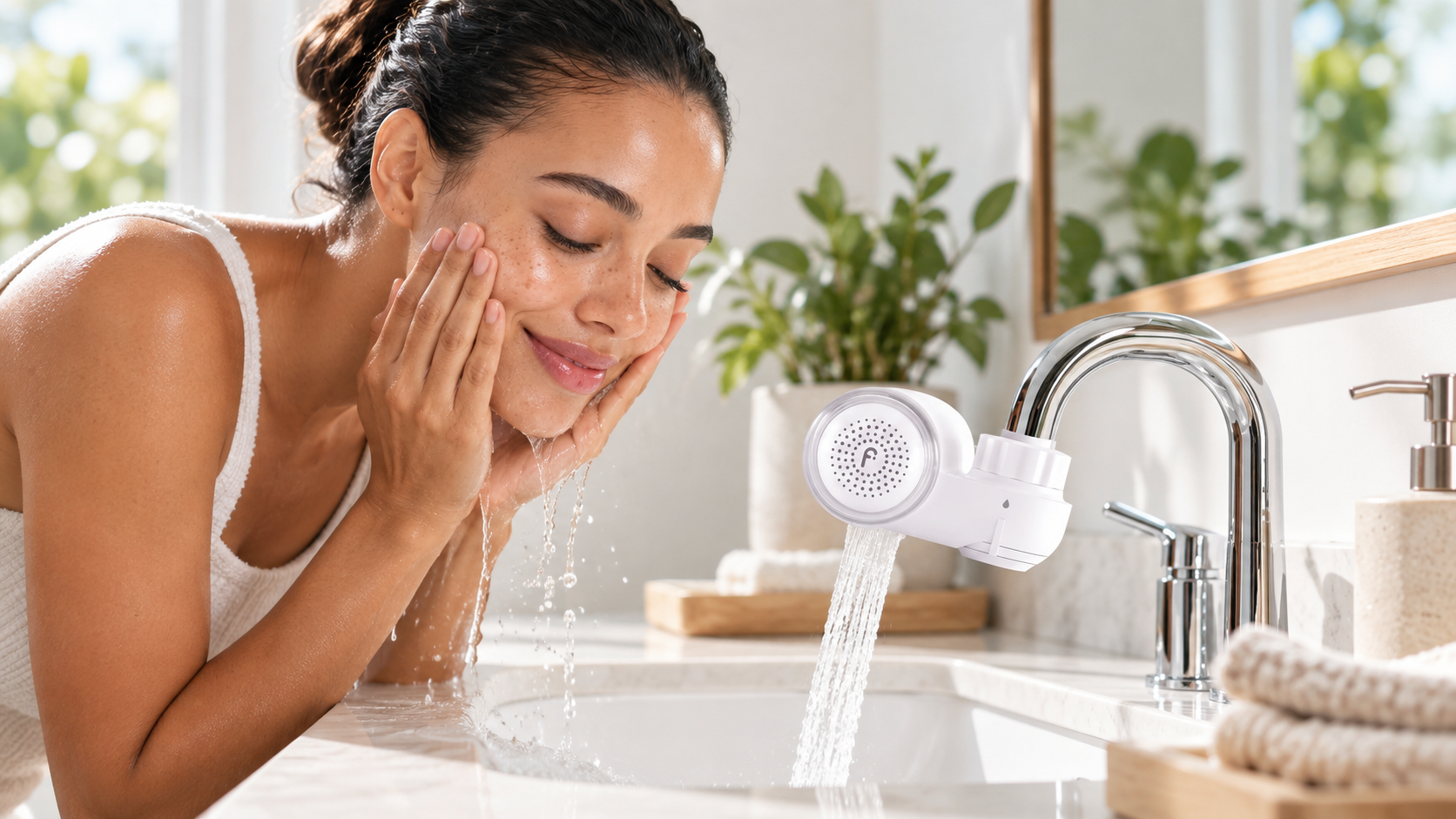
That positioning also makes Filterbaby meaningfully different from inexpensive faucet filters designed mainly to improve drinking-water taste. The Faucet Filter Pro is sold specifically for bathroom use, and its current product page describes it as a skincare filter rather than a general household filtration device. Filterbaby says it has sold more than 500,000 filters, and the brand has expanded from its original faucet concept into shower and bath filtration.
That broader ecosystem strengthens the original idea. If your primary concern is facial cleansing, the faucet product makes sense. If you are more concerned with full-body dryness, scalp exposure or hair, the shower products are more logical. A buyer can therefore treat Filterbaby as a targeted water-quality system instead of assuming everyone needs the same device.
The important qualification is that better-controlled water is only one variable. A filter cannot tell whether your redness is caused by chlorine, a compromised skin barrier, over-exfoliation, dermatitis, an allergy or something unrelated to water. Filterbaby becomes more credible when it is evaluated as a way to reduce exposure rather than as a diagnosis.
2. The Filter Media Matters More Than the Pretty Housing
Filterbaby is easy to notice because the Faucet Filter Pro looks much more like a beauty accessory than plumbing hardware. The design is part of its appeal, but the cartridge is ultimately what determines whether the product deserves a place on the sink.
The current Faucet Filter Pro refill documentation describes two primary filtration components: Advanced Activated Carbon Fiber and a Japanese-made polyethylene ultrafiltration membrane. Filterbaby says the carbon stage targets chlorine, chloramine and certain metals, while the ultrafiltration stage is intended to capture physical contaminants such as sediment, rust and microplastics. The brand's faucet testing reports 99.47% initial chlorine reduction, 99.8% initial chloramine reduction, and up to 99% reduction of Class II particulate under the cited test conditions.
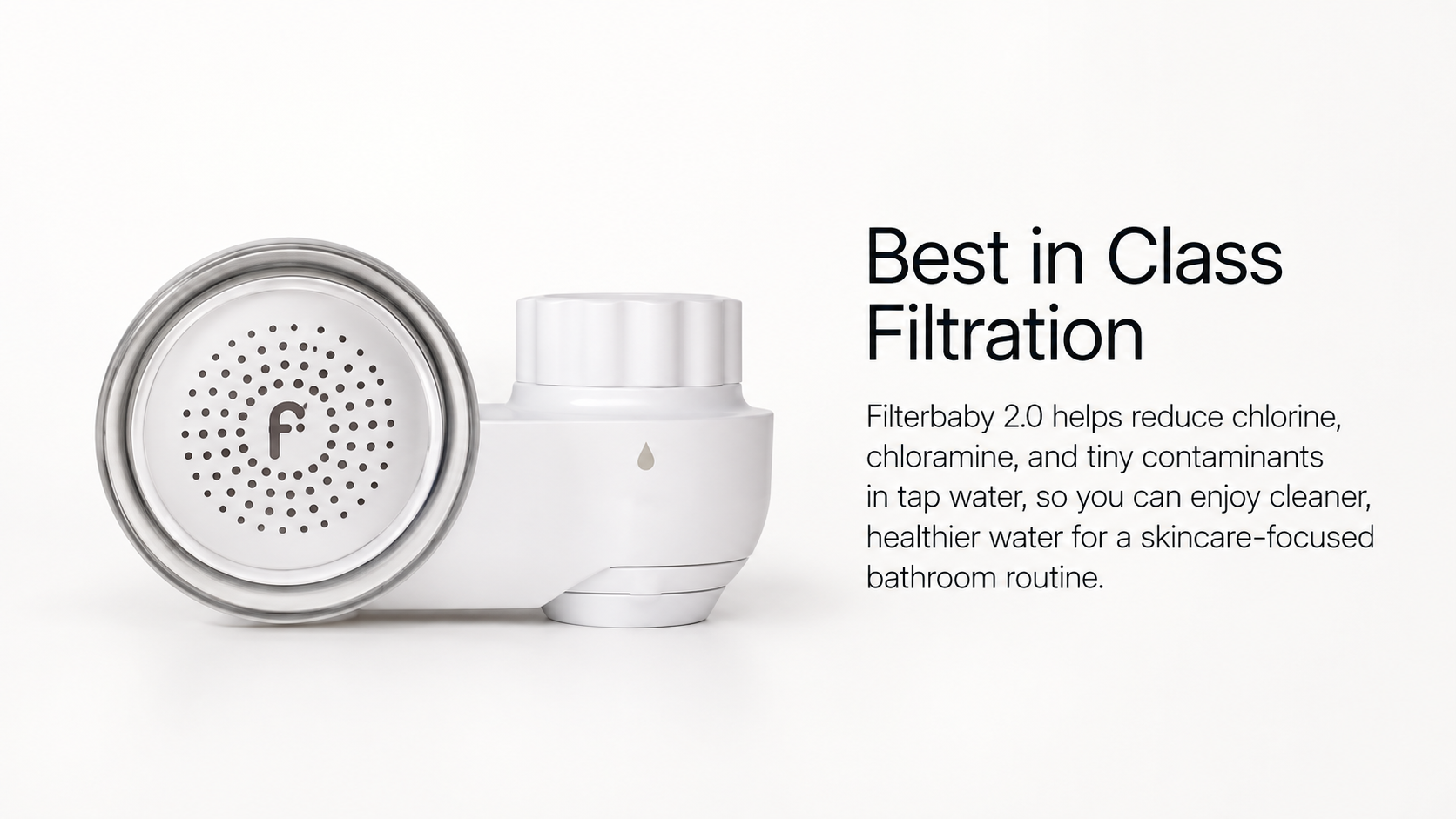
The distinction between chemical filtration and physical filtration is useful. Activated carbon is commonly used because of its ability to adsorb certain compounds, while a membrane provides a physical barrier for appropriately sized particles. Combining those functions makes more sense for Filterbaby's use case than simply putting a small amount of conventional carbon inside an attractive shell.
There is, however, some variation in how different Filterbaby pages describe the number of filtration stages. Current product pages emphasize carbon fiber and ultrafiltration, while newer science material also discusses mineral-reduction functionality. Rather than getting caught up in whether a cartridge should be marketed as having two stages, three stages or some other number, the more useful buyer question is what has actually been measured at the outlet. Filterbaby's newer science pages are unusually helpful here because they distinguish between tests performed on the faucet filter and those performed on the Pro Shower Filter.
That distinction matters because not every impressive number on a filtration company's website necessarily applies to every product it sells. Filterbaby's contaminant reference page explicitly says the broad 60-plus contaminant panel was performed on the Pro Series Shower Refill, while the skincare faucet filter has its own separate data. It also says the current IAPMO certification to NSF/ANSI 177 applies to specified Pro Shower Filter models and does not cover the Skincare Faucet Filter. That level of scope disclosure is worth paying attention to.
Another important distinction is between filtration and water softening. Filterbaby can reduce certain contaminants and particulate matter, but a small point-of-use faucet cartridge should not be confused with a conventional ion-exchange whole-house softener designed to remove large quantities of calcium and magnesium hardness. If limescale, extremely hard water throughout the entire home or appliance protection is your primary concern, a whole-house solution addresses a different problem.
For facial cleansing, however, point-of-use filtration has one obvious advantage: you are treating only the water you actually use at that sink rather than redesigning the plumbing of an entire home.
3. The Skin Evidence Is Better Than Average, but It Still Needs Context
Beauty products often blur four very different things: laboratory filtration tests, biological experiments, measured human outcomes and customer testimonials. Filterbaby has evidence in several of these categories, which is a genuine strength, but buyers should not treat them as interchangeable.
The most useful piece is Filterbaby's third-party human study on the Faucet Filter. The company reports that 35 participants were followed for two weeks, with hydration measured at baseline, week one and week two using a Callegari 1930 Soft Plus probe. Filterbaby reports a 63% measured improvement in hydration, while 61% of the same cohort reported improved radiance. According to its current science page, the study was dermatologist-supervised and performed by a third-party European laboratory.
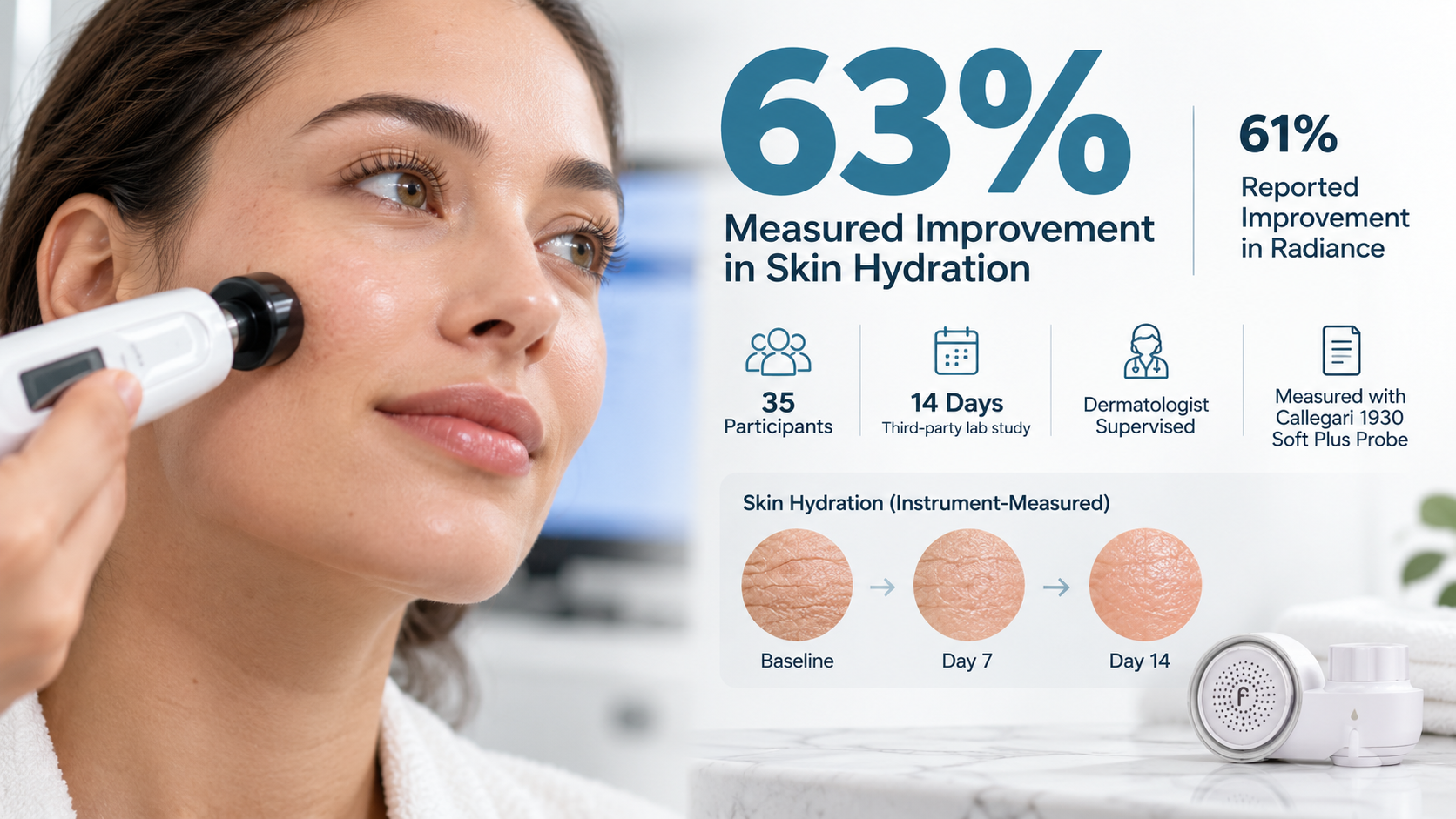
That is more relevant than relying only on testimonials, but it is still a relatively small study and should not be interpreted as proof that the filter treats acne, eczema or rosacea. Hydration is an important skin parameter, yet an improvement in hydration is not the same clinical endpoint as successful treatment of inflammatory skin disease.
Filterbaby also publishes a 2026 longitudinal consumer study involving 160 participants aged 18 to 69. After 30 days, 73% reported improved hydration, 68% reported less dryness, 63% reported reduced acne, 62% reported less redness and 61% reported improved radiance. Those numbers are interesting because the sample is considerably larger, but these are self-reported outcomes rather than the equivalent of a blinded, randomized clinical trial.
The company additionally references in-vitro work on skin cells. Mechanistic cell studies can help researchers investigate biological responses, but they should remain in their proper category. A change observed in cultured cells does not establish that a faucet filter will heal human skin or treat a medical condition.
Independent dermatology research adds another layer of context. A systematic review and meta-analysis covering 16 studies found an association between harder domestic water and increased odds of atopic eczema in children, and mechanistic studies found greater deposition of sodium lauryl sulphate on skin exposed to harder water. However, randomized trials of domestic water softeners did not demonstrate meaningful improvement in the objective severity of established atopic eczema.
That evidence fits a cautious interpretation of Filterbaby rather well. Water composition can matter to the skin barrier, and reducing certain exposures may be useful, but water filtration should not be framed as a cure. Anyone with persistent acne, dermatitis, eczema, rosacea, unexplained rashes or another medical skin problem should still treat the filter as an environmental adjustment rather than a substitute for appropriate medical evaluation.
4. Faucet, Shower or Both? Buy for the Water Exposure You Actually Care About
One of the easiest ways to overspend with Filterbaby is to assume that the biggest bundle must be the best option. The better approach is to identify where the water exposure you actually care about is happening.
For most people searching specifically for a Filterbaby review, the Faucet Filter Pro is the logical starting point. It is designed for bathroom faucets and facial cleansing. At the time of this review, Filterbaby lists it at $99 on promotional subscription pricing versus a stated $139 regular price. The cheaper Faucet Filter Essential is currently displayed at $89 on subscription pricing versus $125 one time. Prices and promotions can change, so those numbers are best treated as a snapshot rather than a permanent price promise.
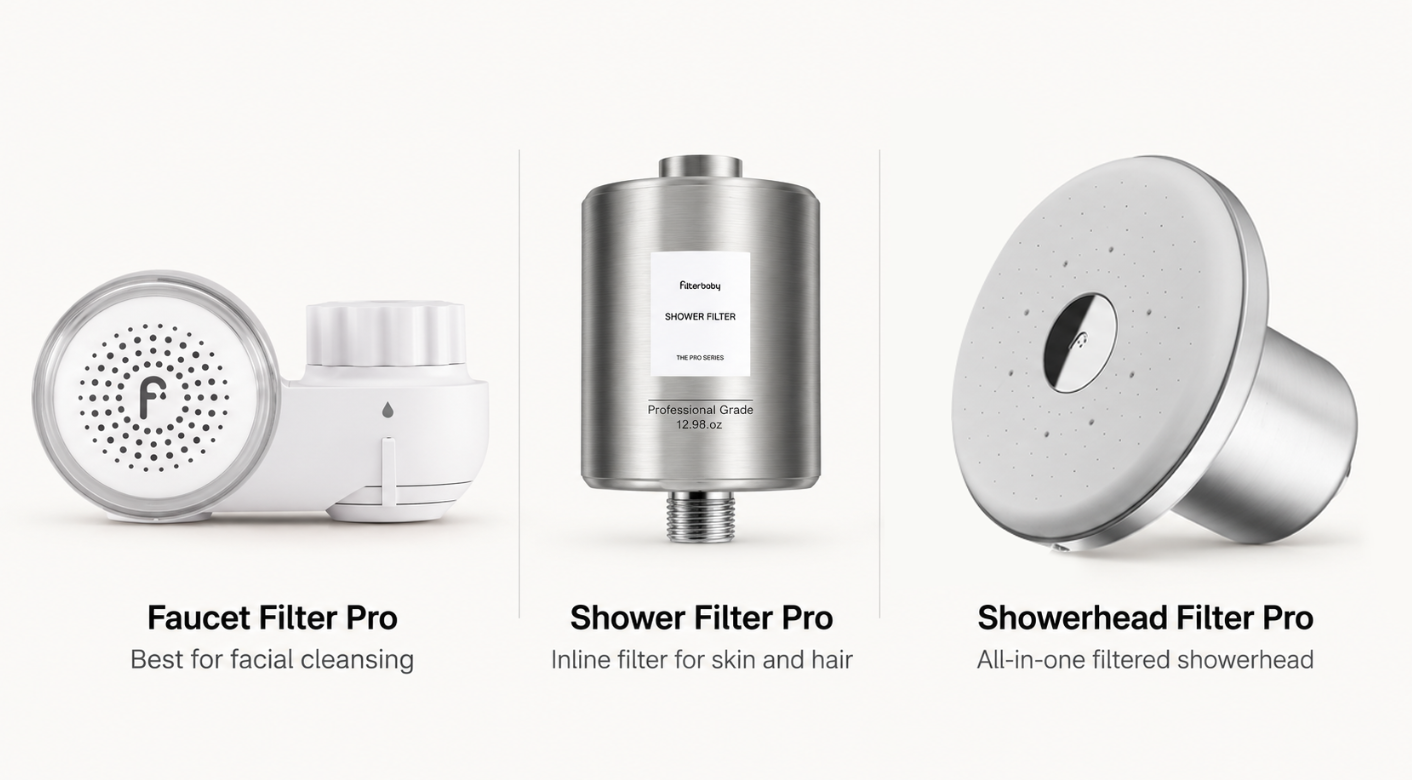
The Shower Filter Pro is an inline system that connects between the shower arm and your existing showerhead. It makes the most sense if you already like your showerhead but want filtration across the entire shower. The current product page lists a titanium-aluminum housing, a 90-day filter cycle and promotional subscription pricing of $99 versus a $139 one-time purchase. Filterbaby's published testing for this product is particularly detailed: the brand reports 99.06% initial free-chlorine reduction and 98.51% reduction at the full 10,000-liter rated life under NSF/ANSI 177 testing.
The Showerhead Filter Pro combines the showerhead and filtration housing into one unit. It is more appropriate if you want to replace the showerhead anyway, rather than inserting an additional component behind one you already own. It was listed at $126 on promotional subscription pricing versus $159 one time when reviewed.
Filterbaby also sells Essential and Diamond variants at lower prices, plus faucet-and-shower bundles. The Faucet Pro + Shower Filter Pro bundle was listed at $149 on current subscription promotional pricing versus $249 one time when checked.
The brand's shower business also has legitimate external recognition. TIME included the Filterbaby Eco-Pro Shower Filter in its Best Inventions of 2024 and a Filterbaby Bath Filter in its 2025 list. That does not prove a skin outcome, but it does support the idea that the company has done more product development than simply putting a familiar filter medium inside generic hardware.
My buying logic would therefore be simple: start with the Faucet Filter Pro if your concern is facial cleansing, choose the Shower Filter Pro if skin and hair exposure during showers is the bigger issue, and consider a bundle only when you genuinely want both. There is little value in doubling the recurring refill cost merely because a bundle discount looks attractive.
5. The Five-Minute Installation Is Easy Only If Your Faucet Passes One Check
A faucet filter can have excellent media and still become useless if the adapter never fits your sink. That makes compatibility more important here than another percentage point on a lab chart.
Filterbaby says its faucet system is compatible with approximately 98% of U.S. faucets that have a circular removable aerator. That sentence contains the condition that matters. The number does not mean 98% of every faucet design. Faucets with unusual proprietary outlets, non-removable aerators or unconventional shapes deserve extra attention before ordering.
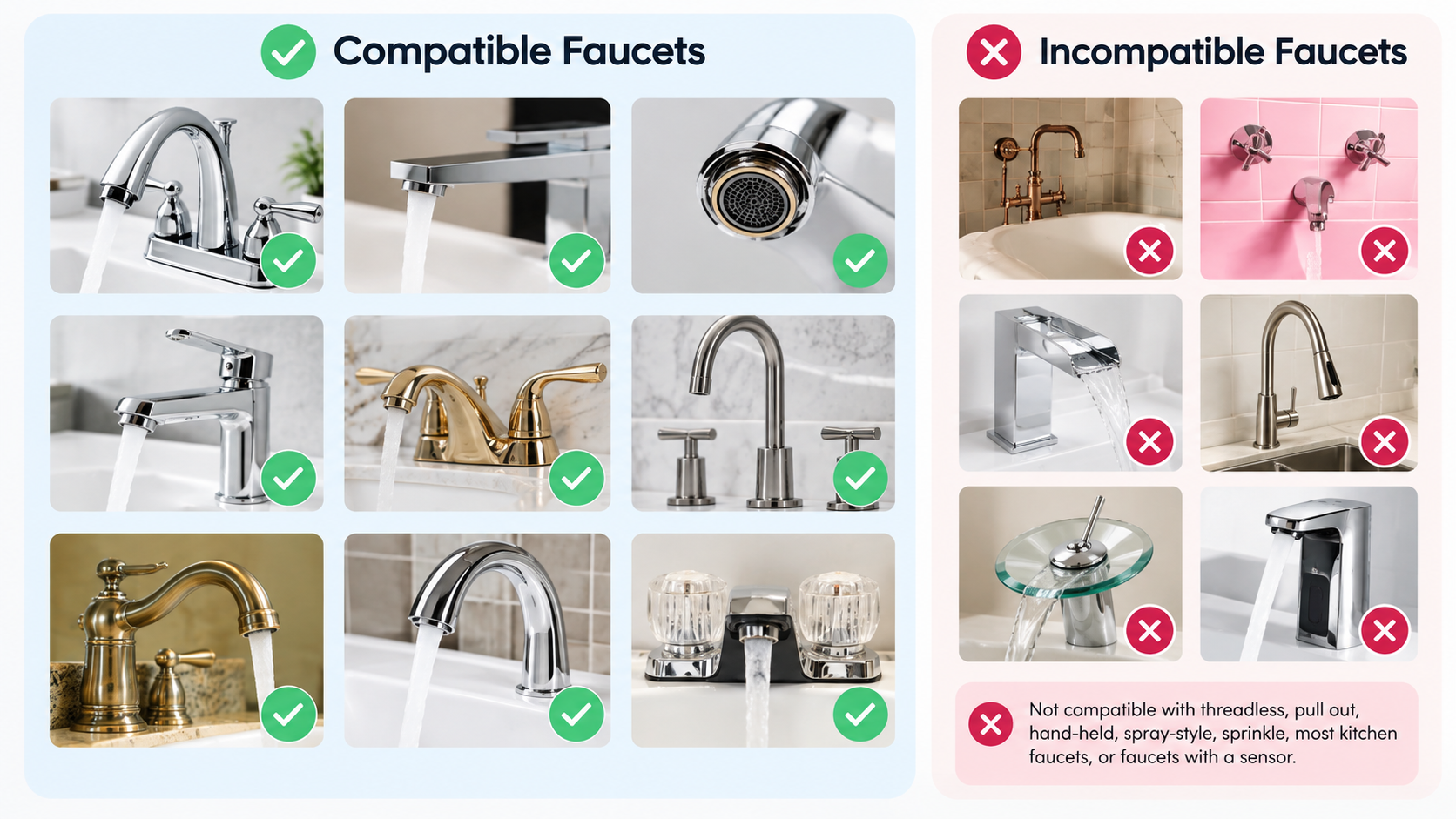
For compatible faucets, the installation concept is refreshingly straightforward. Remove the existing aerator, identify the correct adapter, attach the Filterbaby housing and flush the filter before regular use. The compatibility page says the current kit includes multiple adapters, with additional help available if the supplied fittings do not work. Filterbaby's product pages position the installation as a sub-five-minute job that does not require a plumber.
The ability to switch between filtered and unfiltered flow is another practical detail. You do not necessarily need to consume cartridge capacity every time the faucet is used for an unrelated task. That is especially useful in a shared bathroom where one person may be using filtered water for facial cleansing while another simply wants to rinse something in the sink.
Independent reviews broadly support the idea that installation is one of the easier aspects of ownership. Trustpilot's current summary frequently mentions straightforward installation, and individual reviewers describe successful installation even on recessed aerators when the correct pieces were available. At the same time, there are owners who have struggled with fit or obtaining replacement adapters, so it would be a mistake to treat compatibility as automatic.
Water pressure deserves similar nuance. Many owners report satisfactory or even stronger-feeling flow, while some report pressure falling as a cartridge ages or accumulates debris. That is not necessarily evidence of product failure. A filter is collecting material by design, and the more challenging the source water, the faster resistance can increase. Filterbaby itself says replacement frequency can vary according to local water quality and mineral density.
The practical advice is simple: check your aerator before buying and photograph the faucet if you are uncertain. It is much easier to solve compatibility before placing an order than after an opened filter and a pile of adapters are sitting on the bathroom counter.
6. The Device Is a One-Time Purchase, but Cleaner Water Becomes a Recurring Expense
The sticker price is not the real price of Filterbaby. The housing is reusable, but filtration only works as intended if the cartridge continues to be replaced.
For the Faucet Filter Pro, Filterbaby currently recommends replacing the cartridge every 60 to 90 days, with 90 days functioning as the normal upper limit for daily use. The Pro faucet replacement is listed at $45 as a one-time purchase or $39 through the current subscription offer. Filterbaby also notes that source-water quality and mineral density may require more frequent replacement.
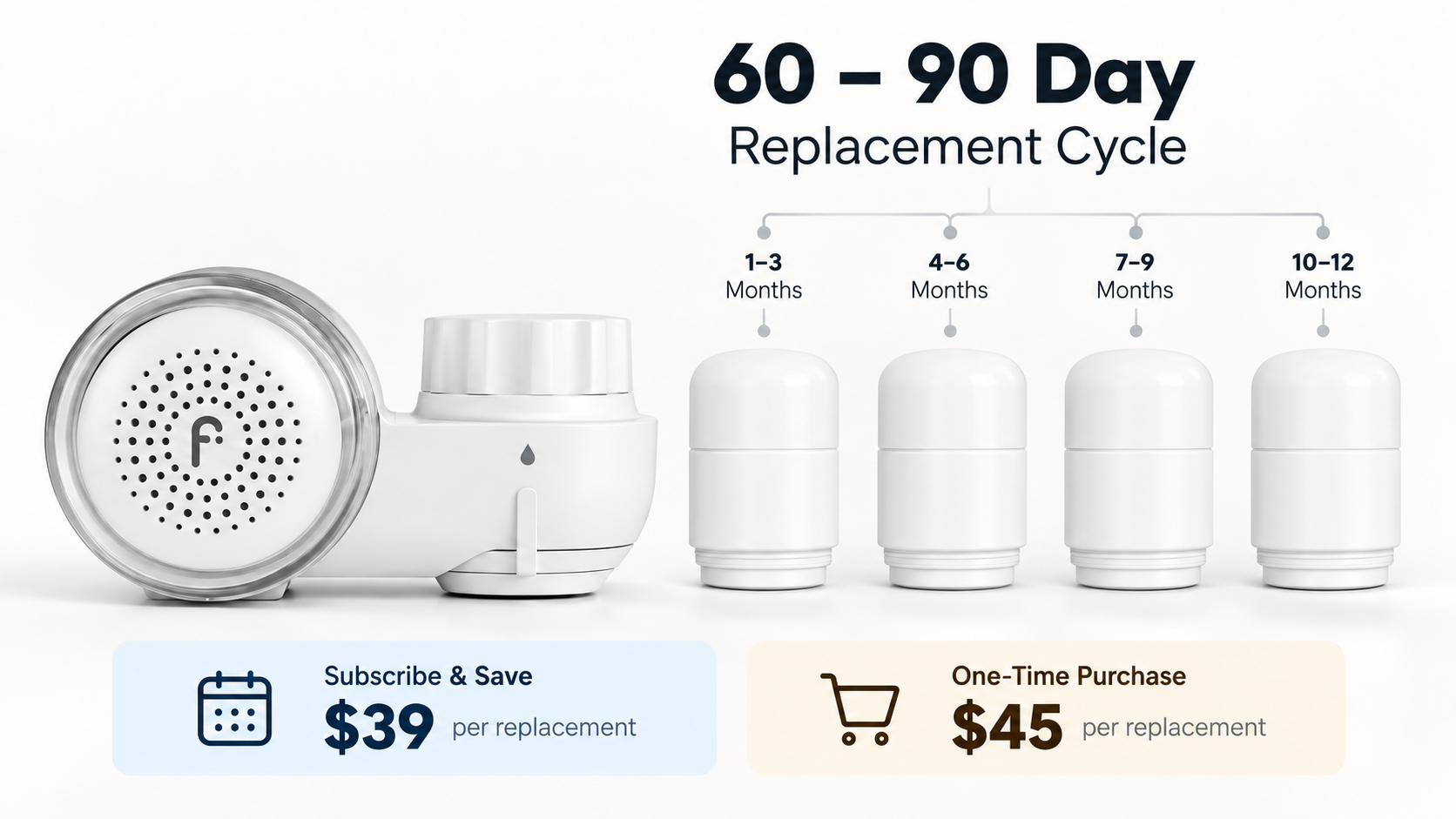
This changes the value calculation substantially. If the Faucet Filter Pro is purchased at the current $99 subscription promotional price and the included cartridge lasts roughly 90 days, a simplified first-year ownership estimate would be around $216 before tax, assuming three additional $39 cartridges are needed during that year. After the starter device is already owned, four $39 refills would equal approximately $156 per year at the same subscription price.
At one-time prices, the calculation is higher. A $139 starter plus three $45 refills would be about $274 during the first year, while four replacement cartridges would total roughly $180 in a typical subsequent year. Those numbers are estimates because actual replacement timing depends on water usage and quality, and Filterbaby's promotions frequently change.
That recurring cost is probably the biggest legitimate criticism of the system. A consumer who spends $15 on cleanser and has uncomplicated skin may reasonably decide that another $150-plus yearly category is unnecessary. Someone already spending several hundred dollars each year on serums, treatments and barrier-support products may look at the same number and consider water filtration relatively reasonable.
The subscription also deserves attention beyond the headline discount. Current Filterbaby product pages state that subscription offers can include a two-delivery minimum before cancellation, although users are generally offered scheduling flexibility such as skipping deliveries. Terms can change, so the checkout page is worth reading rather than treating “subscribe and save” as a simple coupon.
Purchase protection softens the risk somewhat. Filterbaby's current product pages advertise a 30-day trial, while the FAQ states that starter kits receive an automatic 90-day limited warranty. A limited lifetime warranty option is tied to qualifying active refill subscriptions purchased through Filterbaby. The FAQ also makes clear that return shipping is generally the customer's responsibility and that opened refill cartridges and certain replacement orders are excluded from returns.
So the fairest way to judge Filterbaby's price is not “$99 for a faucet attachment.” You are buying a reusable point-of-use system and agreeing to a maintenance cycle. Whether that feels expensive depends less on the initial housing than on whether you are comfortable paying for fresh filtration several times a year.
7. Real Owners Mostly Like the Product, but Fit and Support Still Matter
Customer reviews are most useful here for practical ownership questions, not medical claims. Someone saying a filter cured their acne does not prove that the filter treats acne. Someone saying the adapter cracked, the installation took three minutes or customer support helped them identify a fitting is much more useful information.
As of this review, Filterbaby has a 4.6 out of 5 Trustpilot score across more than 800 reviews, with 86% of ratings at five stars. Trustpilot's review summary highlights installation, perceived product quality, usability and helpful customer support as recurring positives. It also identifies occasional complaints involving delayed support responses, replacement parts and water pressure.

There are plenty of recent examples of satisfied owners describing easy installation, good-looking hardware and a positive support experience. Some users specifically mention being helped through installation problems, while others say filter replacement takes only a few minutes. Those comments line up well with Filterbaby's strongest non-medical advantage: it has managed to make a plumbing accessory feel approachable to people who would never normally shop for plumbing equipment.
The less positive feedback is still worth knowing. Some recent reviewers describe waiting for replies, difficulties obtaining proprietary replacement pieces or frustration with returns. BBB complaint records also include examples involving undelivered packages, communication delays, compatibility issues and replacement-product disputes. Complaints do not establish that every customer will encounter the same problem, but they show why buyers should keep order records and confirm compatibility before opening everything.
What I would not do is use customer photos or testimonials as scientific evidence for clearer skin, thicker hair or reduced inflammation. People's routines, climates, water sources, medications and skincare products vary too much. Customer feedback is better interpreted as evidence about ownership friction and satisfaction, while the filtration and clinical studies should carry the scientific discussion.
Viewed that way, the review picture is favorable. Most of the recurring positives are exactly the kinds of things a physical product needs to get right: installation, daily usability, appearance and easy cartridge replacement. The problems that do appear are more often logistical than fundamental objections to the concept of the filter itself.
8. Filterbaby Makes the Most Sense When Water Is the Variable You Have Not Tried Yet
Filterbaby will not make equal sense for every skincare buyer. The strongest candidate is someone who has already made their cleanser and moisturizer reasonably gentle, still notices dryness or irritation after washing, and lives somewhere where the water has noticeable chlorine, sediment or other quality issues. Frequent travelers who notice their skin changing dramatically between cities may also find the water-quality hypothesis worth investigating.
It also fits the consumer who thinks about skincare as a system rather than a shelf of products. Spending heavily on topical products while ignoring the water used to wash them off is not necessarily irrational, but there is a logical point at which reducing unnecessary exposure becomes more attractive than adding yet another serum.

The Faucet Filter Pro is especially compelling if you want a low-complexity experiment. Unlike replacing an entire water-heating or plumbing system, it is relatively easy to install, relatively easy to remove and isolated to the sink where facial cleansing actually happens. If you notice no meaningful improvement in comfort or routine quality over time, you have learned something without redesigning your home.
The product is less compelling for someone whose primary problem is whole-house hard water. If calcium and magnesium are creating scale throughout the plumbing, spotting glassware and damaging appliances, a faucet skincare filter is not addressing that entire problem. A household water softener or broader water-treatment assessment belongs in a different category.
It is also not the product I would buy with the expectation that it will cure acne, eczema, rosacea or hair loss. Filterbaby has more evidence than many beauty-oriented water-filter brands, particularly its measured hydration study and shower contaminant data, but the evidence does not justify turning a filtration device into a medical treatment. That boundary actually makes the positive case easier to trust.
For the right user, Filterbaby's value comes from reducing potentially undesirable water exposures, creating a more controlled cleansing environment and doing so with hardware that feels intentionally designed for a bathroom rather than adapted from the kitchen. The trade-off is straightforward: you need a compatible faucet, you need to maintain the cartridge schedule, and you need to be comfortable with the recurring cost.
That is a more realistic promise than “perfect skin from better water,” and it is enough to make Filterbaby one of the more interesting skincare-adjacent filtration systems currently available.
Make Water the First Step in Your Filterbaby Routine
If the idea makes sense for your routine, the Faucet Filter Pro is the most logical place to start rather than immediately buying the entire ecosystem. Check that your faucet has a removable circular aerator, compare the current Faucet Pro and Essential pricing, and factor at least several replacement cartridges per year into the real ownership cost.
If your concerns extend to body skin, scalp or hair, compare the inline Shower Filter Pro with the all-in-one Showerhead Filter Pro before choosing a bundle. The best Filterbaby setup is not necessarily the largest one. It is the one that filters the water exposure you actually want to change.
If water quality is the part of your skincare routine you have not addressed yet, Filterbaby gives you a simple way to start with either the sink or shower.