Our score
8.7/10
Source
CGReviewHub
Category
General
Editorial review
Our honest review
A photographer's bag has a surprisingly difficult job. It needs to protect expensive equipment, keep frequently used accessories accessible, remain comfortable throughout a long session, and ideally look appropriate when working with clients. Many traditional camera bags prioritize protection and storage, leaving style as an afterthought. Fashion-oriented alternatives often look beautiful but overlook how photographers actually use their equipment.
Ruby+Rae approaches this problem differently. Created by a photographer, the brand combines elegant camera bags with practical carrying systems designed around the movement and organization of real photography sessions.

From the compact Sidekick to the dual-camera Duo, versatile backpacks, and specialized film accessories, the collection offers more variety than its polished appearance initially suggests. But thoughtful design does not automatically make every bag right for every photographer.
This Ruby+Rae review explores what makes the collection distinctive, how its products fit different shooting styles, and where the investment makes the most sense.
1. Designed by a Photographer Who Understands What Happens Between Shots
Some camera bags are designed primarily around how much equipment they can accommodate. Others focus on appearance, treating cameras as just another item to carry. Ruby+Rae's founding idea sits somewhere between these approaches. According to the brand, its creator is a photographer, wife, and mother who wanted gear that could handle demanding shooting days without sacrificing a polished, professional appearance.
That background explains why the collection feels particularly focused on the smaller moments of photography. A wedding photographer may spend more time walking between locations, changing lenses, reaching for memory cards, and communicating with clients than actually pressing the shutter. A bag that makes those transitions easier can become an important part of the workflow rather than simply a storage solution.
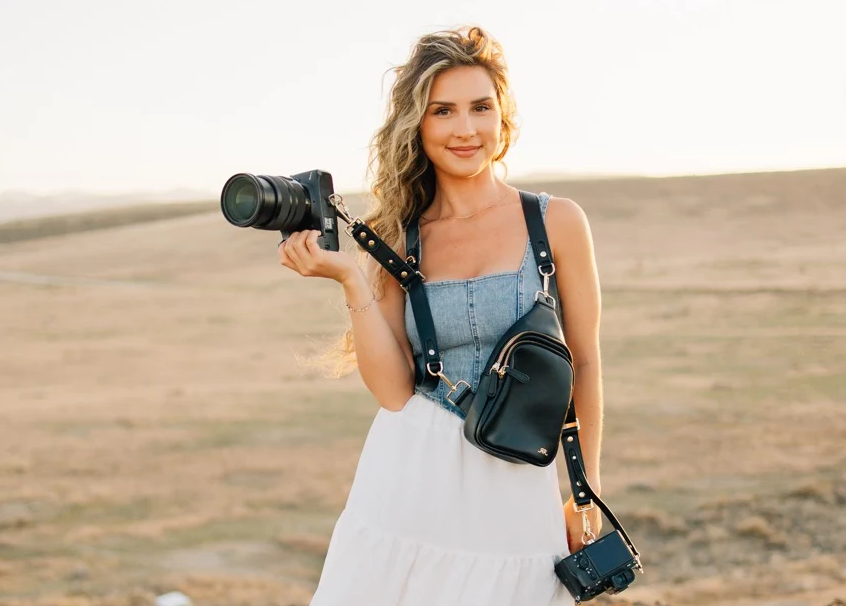
The brand's aesthetic is equally intentional. Its products commonly feature vegan leather exteriors, soft interior linings, structured silhouettes, and gold-tone hardware. Rather than resembling technical outdoor equipment, many Ruby+Rae bags could pass as everyday fashion accessories. That distinction matters to photographers who move between professional assignments, meetings, travel, and ordinary daily activities.
However, the more compelling aspect is the broader product ecosystem. Ruby+Rae does not expect one backpack to serve every purpose. Instead, it offers smaller shooting companions, camera harnesses, larger equipment carriers, and specialized accessories that address different stages of a photographer's day.
The result is a brand whose strongest idea is not simply beautiful camera storage. It is making photography equipment feel more naturally integrated into everyday work.
2. The Sidekick and Mae: Two Different Answers to the Same Carrying Problem
Not every photography session requires a full backpack. For many portrait, lifestyle, and wedding photographers, the real challenge is finding a way to keep one camera and a few essentials close without carrying more gear than the session actually demands. Ruby+Rae approaches that problem with two very different products: The Sidekick, which treats the bag as part of the shooting system, and The Mae Crossbody, which behaves more like a stylish camera purse with protected internal storage.
The important difference is not simply size or appearance. It is where the camera lives while you are working. Sidekick is built around fast access and active shooting, while Mae is designed around carrying the camera inside the bag until it is needed.
The Sidekick: Built Around the Way a Photographer Moves
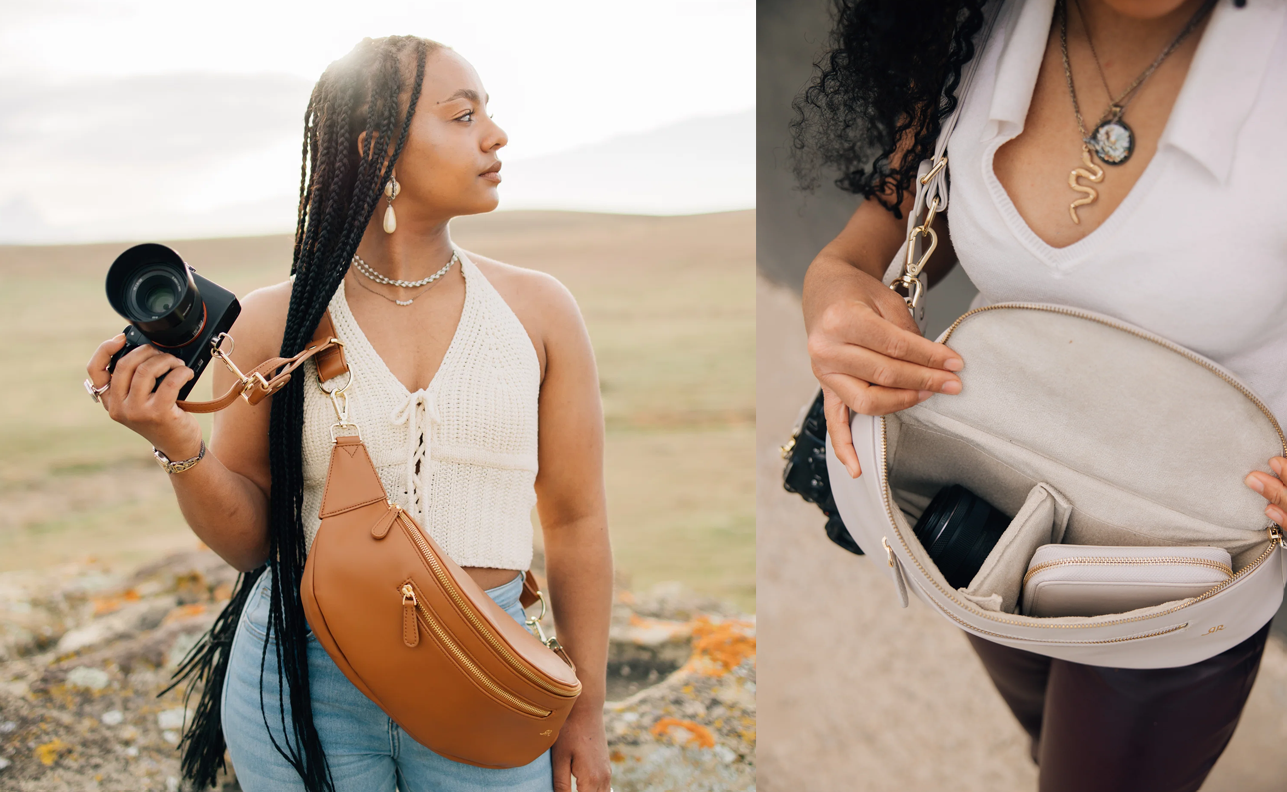
At $89.99, The Sidekick is one of Ruby+Rae's most distinctive products because it goes beyond being a small crossbody bag. The design combines storage with a camera-carrying setup, allowing photographers to keep the camera accessible while carrying smaller essentials such as batteries, memory cards, a phone, or a compact lens nearby.
That makes Sidekick particularly appealing during sessions where the photographer is constantly moving. Instead of repeatedly taking off a backpack or opening a large camera bag, the essentials remain within reach at waist or hip level. For wedding photographers, portrait shooters, or creators walking between locations, that can make the workflow feel considerably more fluid.
The removable interior divider also gives the bag some flexibility. It can be configured around a photographer's particular essentials rather than forcing every user into the same compartment layout. However, Sidekick is still a compact solution. It is best viewed as a working bag for the gear you need during the shoot, not as a replacement for a full equipment backpack.
The Sidekick therefore makes the most sense for photographers who already know they prefer to travel light during the active portion of a session. If the main goal is quick access, minimal bulk, and keeping the camera ready rather than stored away, it is arguably the more function-driven option of the two.
The Mae Crossbody: Camera Protection Disguised as an Everyday Handbag
The Mae Crossbody, priced at $144.99, takes almost the opposite approach. Instead of emphasizing an external camera-carrying system, Mae is designed to keep the camera protected inside a structured bag. Its padded interior and removable dividers allow photographers to organize a camera body, lens, and personal items while maintaining the appearance of a conventional handbag.
This makes Mae particularly interesting for photographers who dislike the technical appearance of traditional camera bags. From the outside, the woven texture, structured silhouette, and gold-tone hardware give it a fashion-oriented look. That can be valuable for photographers who move between client meetings, casual outings, travel, and shorter shoots without wanting to change bags.
The internal organization is the more important feature, though. Removable padded dividers let the user adjust the interior around the camera setup, which means the bag can be used differently depending on the day. A mirrorless body and small lens may leave space for personal items, while a larger DSLR configuration may require most of the available compartment.
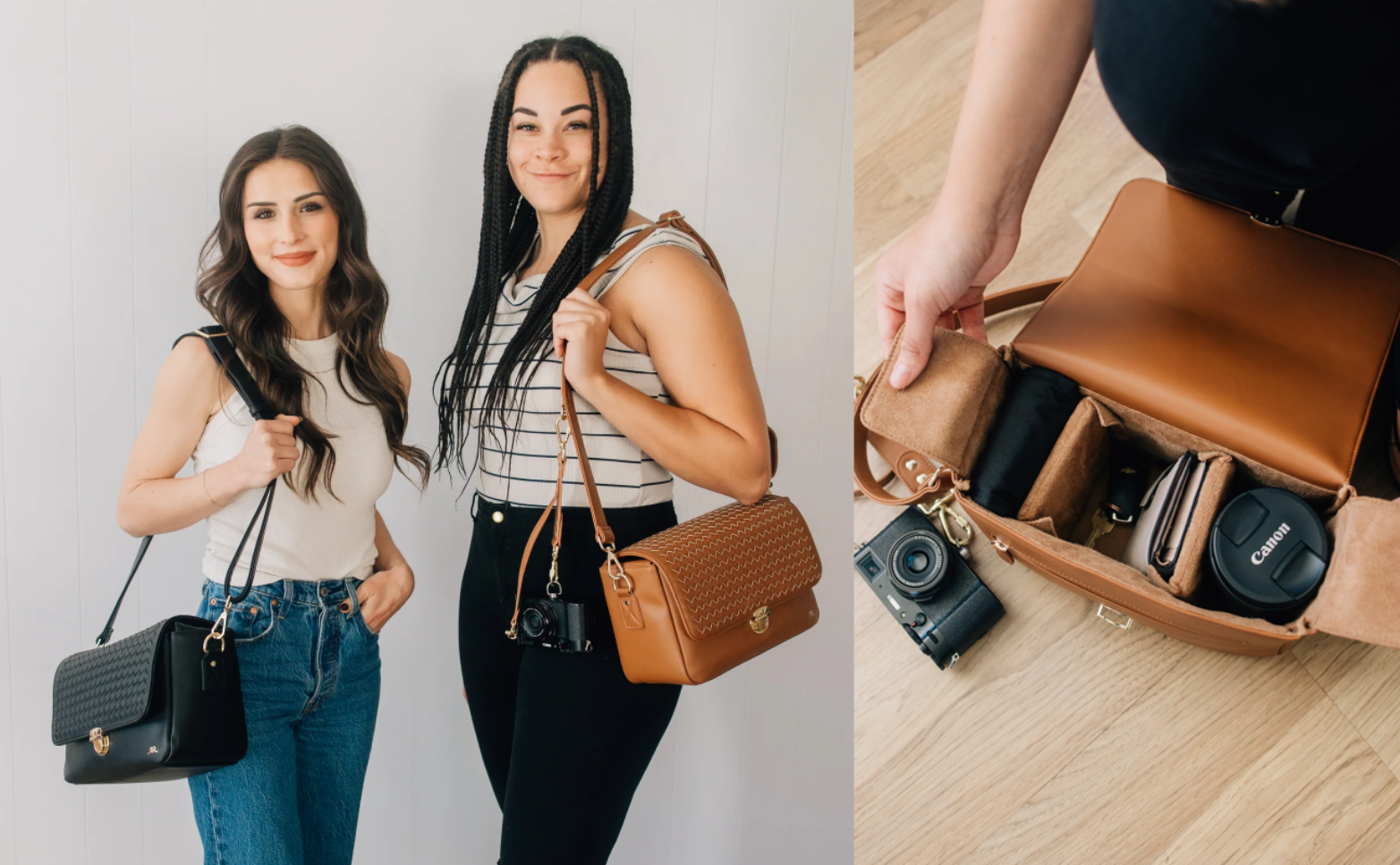
Mae is therefore less about keeping the camera permanently ready in your hand and more about carrying photography equipment discreetly and elegantly. For travel, casual portrait work, content creation, or days when photography is only one part of the schedule, that balance may be more useful than Sidekick's shooting-focused design.
Which One Makes More Sense?
The choice becomes much easier once the photographer thinks about workflow instead of appearance. Choose The Sidekick if the priority is active shooting, quick access, and carrying only the essentials while the camera remains ready for use. Choose The Mae Crossbody if the priority is protecting the camera inside the bag while maintaining the look and versatility of an everyday purse.
Neither product is objectively better. They solve different versions of the same problem. Sidekick is closer to a photographer's working tool, while Mae is closer to a camera bag that integrates naturally into everyday life.
3. The Duo: A Camera-Carrying System Made for the Rhythm of Wedding Photography
Wedding photography presents a challenge that ordinary camera bags rarely solve elegantly. Photographers often work with two camera bodies, frequently equipped with different lenses, because changing lenses during important moments can cost valuable time. The ability to move naturally between two cameras is therefore more than a convenience.
Ruby+Rae's The Duo is designed around this exact situation. It combines a dual-camera harness with a detachable crossbody bag, allowing photographers to keep two cameras accessible while organizing smaller essentials separately. The bag includes two interior compartments, four card slots, and an adjustable upper strap. Camera mounting attachments are included with the complete system.
Unlike a conventional shoulder bag that needs to be opened repeatedly, the Duo keeps the cameras outside the storage compartment and ready for use. The design is particularly relevant during wedding ceremonies, receptions, event coverage, and portrait sessions where photographers alternate between focal lengths.
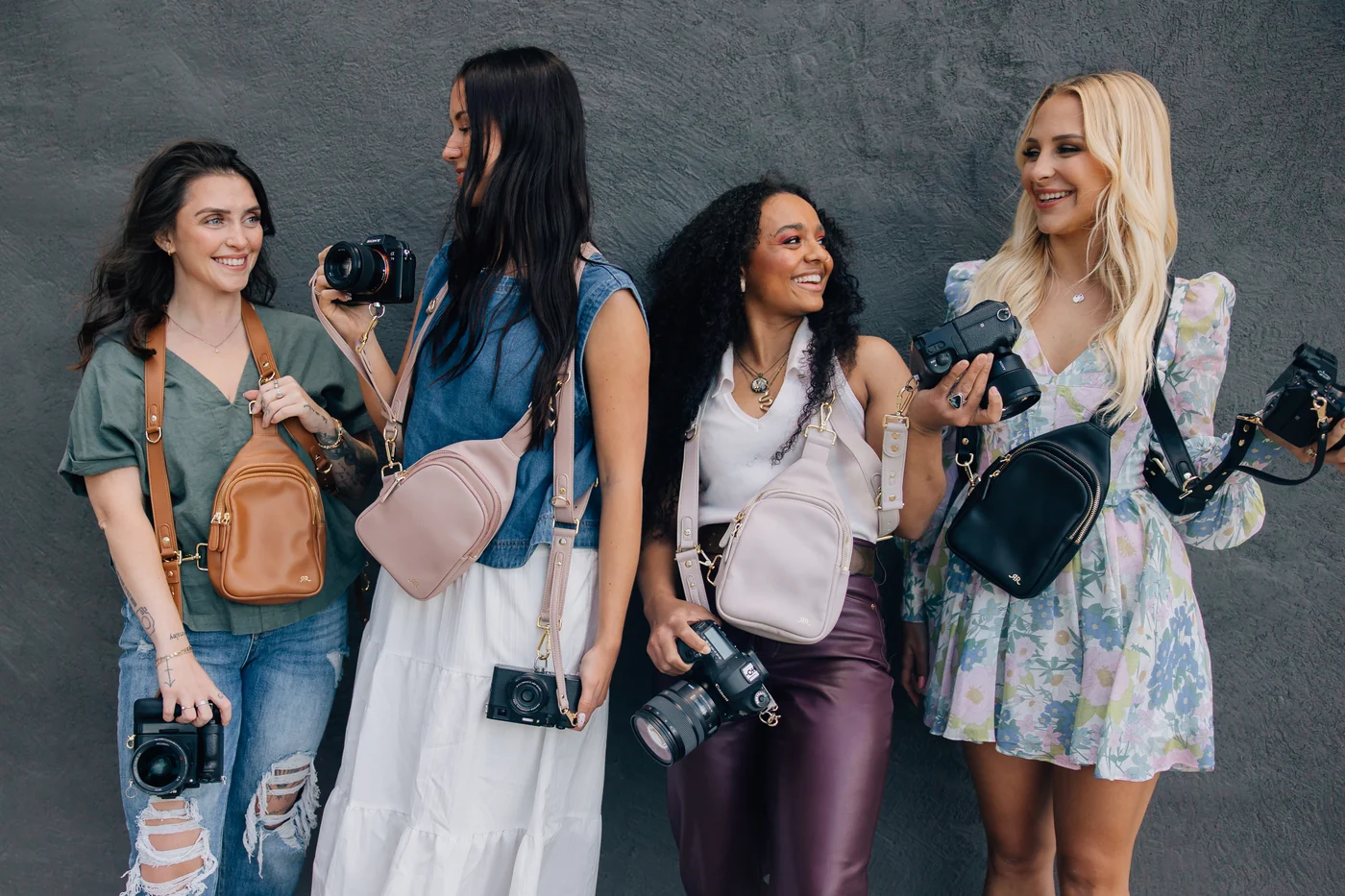
One of the Duo's strongest advantages is its modularity. Photographers who already have a preferred accessory pouch may be interested primarily in the harness. Others may want the complete arrangement for keeping batteries, memory cards, and personal essentials immediately accessible.
This distinction is important when comparing prices. Although the product page advertises options starting at $29.99, that starting price does not represent the full dual-camera setup. A complete Duo variant is listed at $129.99, with separate harness-only and bag-only configurations available.
The practical limitation is fit and carrying comfort. Two camera bodies can become heavy over a long assignment, and individual comfort depends on body proportions, camera weight, and strap adjustment. Buyers should check attachment compatibility and ensure every clip is secured before working.
For photographers regularly operating two cameras, the Duo is one of Ruby+Rae's most distinctive products because it addresses an established professional workflow rather than merely offering another place to store equipment.
4. Ruby, Rae, or Lyla? Choosing a Backpack Around Your Actual Equipment
Ruby+Rae’s backpack lineup may look visually consistent from the outside, but the three main models are built around noticeably different ways of carrying gear. The important decision is not simply which backpack is bigger or more expensive. It is whether you prefer separated camera storage, a compact customizable interior, or a larger flexible workspace for a heavier everyday kit.
The Ruby Backpack: Best for Separating Camera Gear From Everything Else
At $189.99, The Ruby Backpack is the most structured of the three. Its defining feature is a two-zone layout: camera equipment sits in a dedicated lower compartment with adjustable dividers, while the upper section remains available for chargers, personal items, notebooks, or other everyday essentials. Side access to the camera compartment also means photographers can reach their gear without fully opening the backpack.
That organization makes Ruby particularly appealing for photographers who dislike mixing lenses and camera bodies with the rest of their belongings. It also accommodates a laptop up to 16 inches, while a luggage-handle sleeve, water bottle pocket, and shoulder-strap attachment rings make it practical for travel and longer shooting days. Rather than maximizing raw capacity, Ruby focuses on keeping different categories of gear clearly separated.
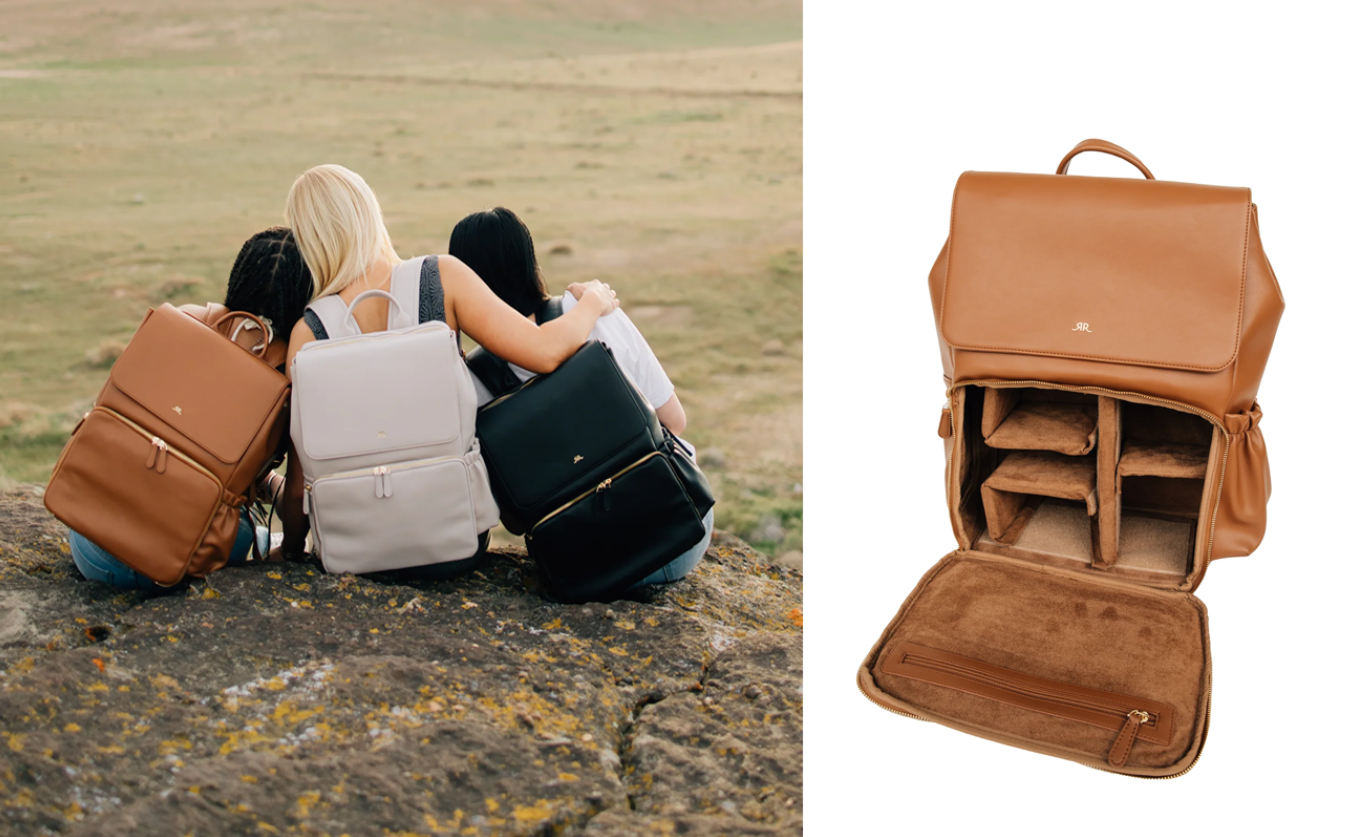
The Rae Backpack: A More Compact Setup for Lighter Camera Kits
The Rae Backpack, priced at $174.99, takes a more flexible approach. Instead of separating the camera into a dedicated lower section, Rae uses a configurable main compartment with removable dividers. That allows photographers to rearrange the interior depending on the camera body, lenses, accessories, and personal items they plan to carry that day.
Measuring approximately 15 x 12 x 5.5 inches, Rae is also the more compact option and supports laptops up to 14 inches. That combination makes it particularly attractive for mirrorless users, portrait photographers, content creators, or anyone who prefers a lighter everyday setup. The smaller footprint can feel easier to manage during casual sessions or city travel, especially when there is no need to carry an extensive lens collection.
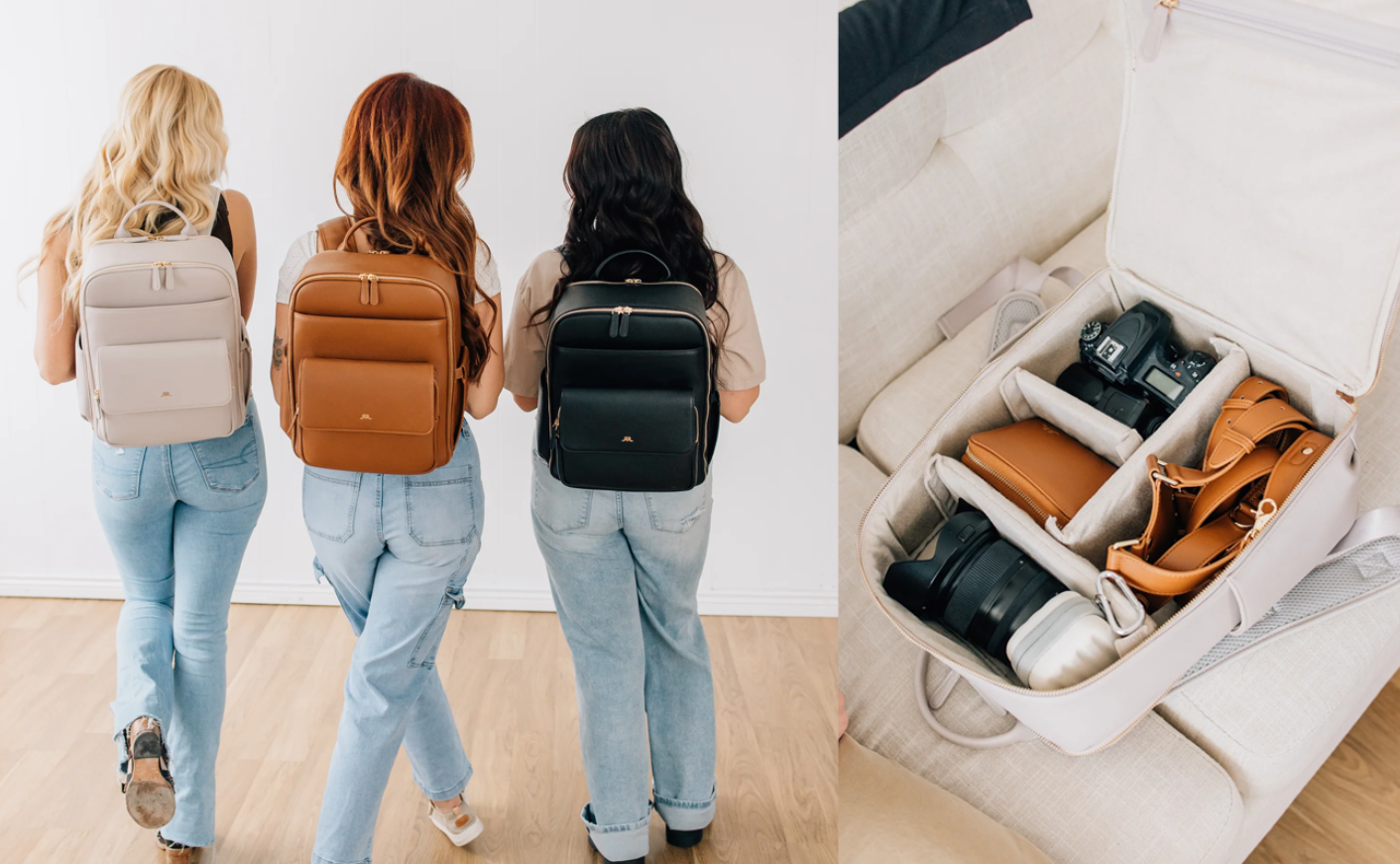
Rae makes the most sense when flexibility matters more than strict separation. The tradeoff is that photographers carrying larger bodies, longer lenses, or substantial backup equipment may find themselves using most of the available space quickly.
The Lyla Backpack: More Room for Photographers Who Carry a Full-Day Kit
At $229.99, The Lyla Backpack expands on Rae’s configurable design rather than copying Ruby’s two-zone structure. Its larger 17 x 12 x 6.5-inch body provides more room for camera equipment, accessories, and personal items, while the removable dividers allow photographers to customize the interior around different combinations of bodies and lenses.
Lyla also accommodates laptops up to 16 inches and includes practical travel-oriented details such as shoulder-strap attachment rings, exterior storage, and a luggage-handle sleeve. The extra capacity can be especially useful for photographers who routinely carry backup lenses, multiple camera bodies, larger accessories, or enough equipment for an entire day away from home.
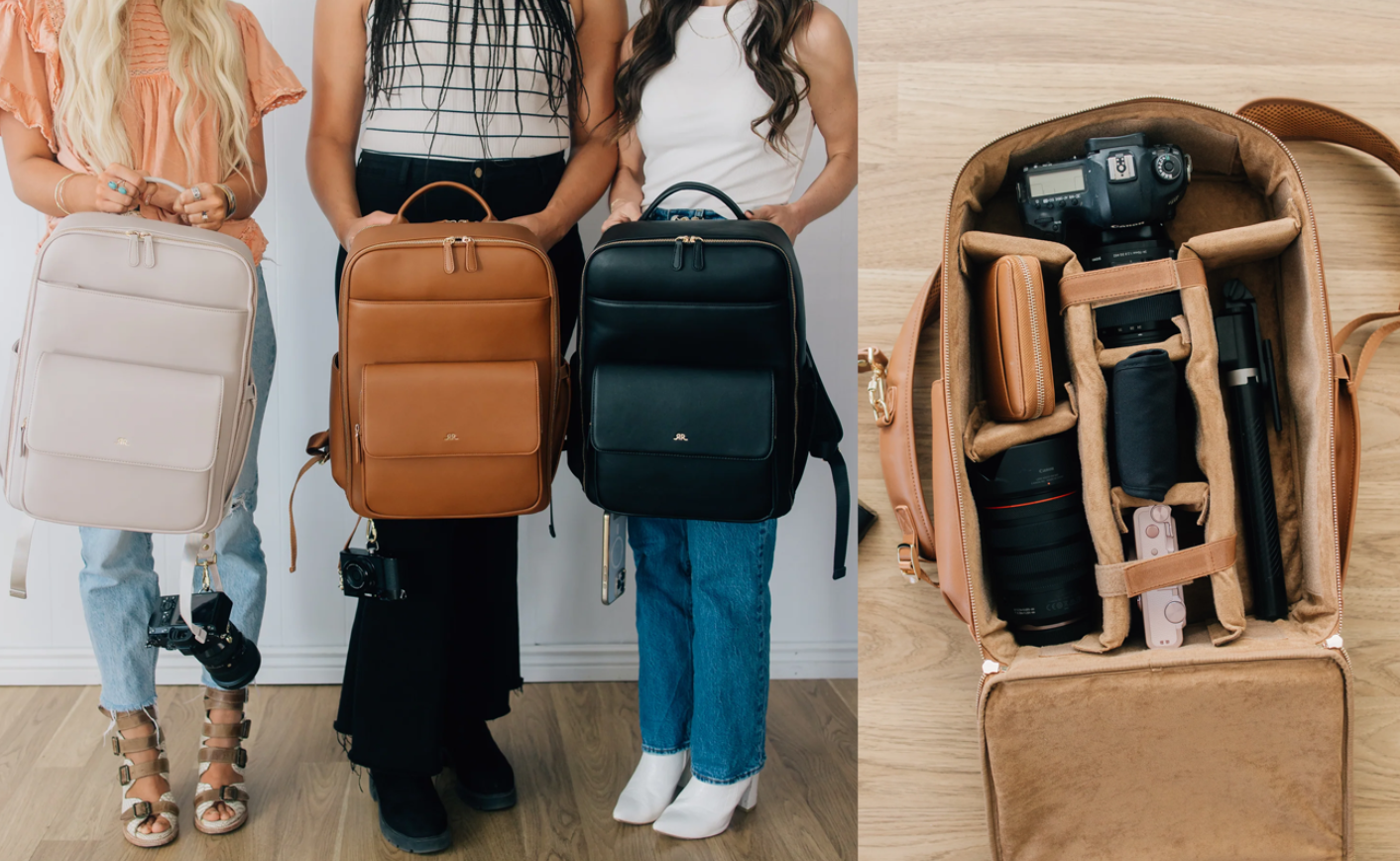
More space, however, is only useful when you actually need it. Someone shooting with one compact mirrorless body and two small lenses may find Lyla unnecessarily large, while a wedding or commercial photographer carrying backup equipment could appreciate the extra flexibility immediately.
Which Ruby+Rae Backpack Makes the Most Sense?
The simplest way to compare the three is by looking at how you want your equipment organized. Choose Ruby if you want camera gear physically separated from everyday belongings and value quick side access. Choose Rae if you prefer a smaller backpack with a flexible interior for a lighter setup. Choose Lyla if your kit is larger and you want more room without giving up the customizable divider system.
The differences are therefore more meaningful than a simple small, medium, and large comparison. Ruby is about separation, Rae is about compact flexibility, and Lyla is about expandable working space. Before ordering, it is worth measuring your camera body and longest lens, especially if you use a battery grip or unusually large equipment.
You can compare the available colors, current pricing, and configurations directly at Ruby+Rae before deciding which backpack best matches the way you actually carry your gear.
5. The Anissa Film Collection: Small Design Decisions That Analog Photographers Will Appreciate
Film photography creates a different set of organizational needs. Alongside a camera and lenses, photographers may carry several rolls of film, accessories for older camera bodies, and personal items. Keeping film accessible without mixing it into a crowded equipment compartment can make a noticeable difference.
The Anissa Film Bag, priced at $169.99, reflects these particular requirements. Developed in collaboration with photographer Anissa D., it features removable interior dividers, a dedicated lower compartment for film storage, an accessible front pocket, and a concealed rear pocket. The bag can also be worn as either a crossbody or backpack.
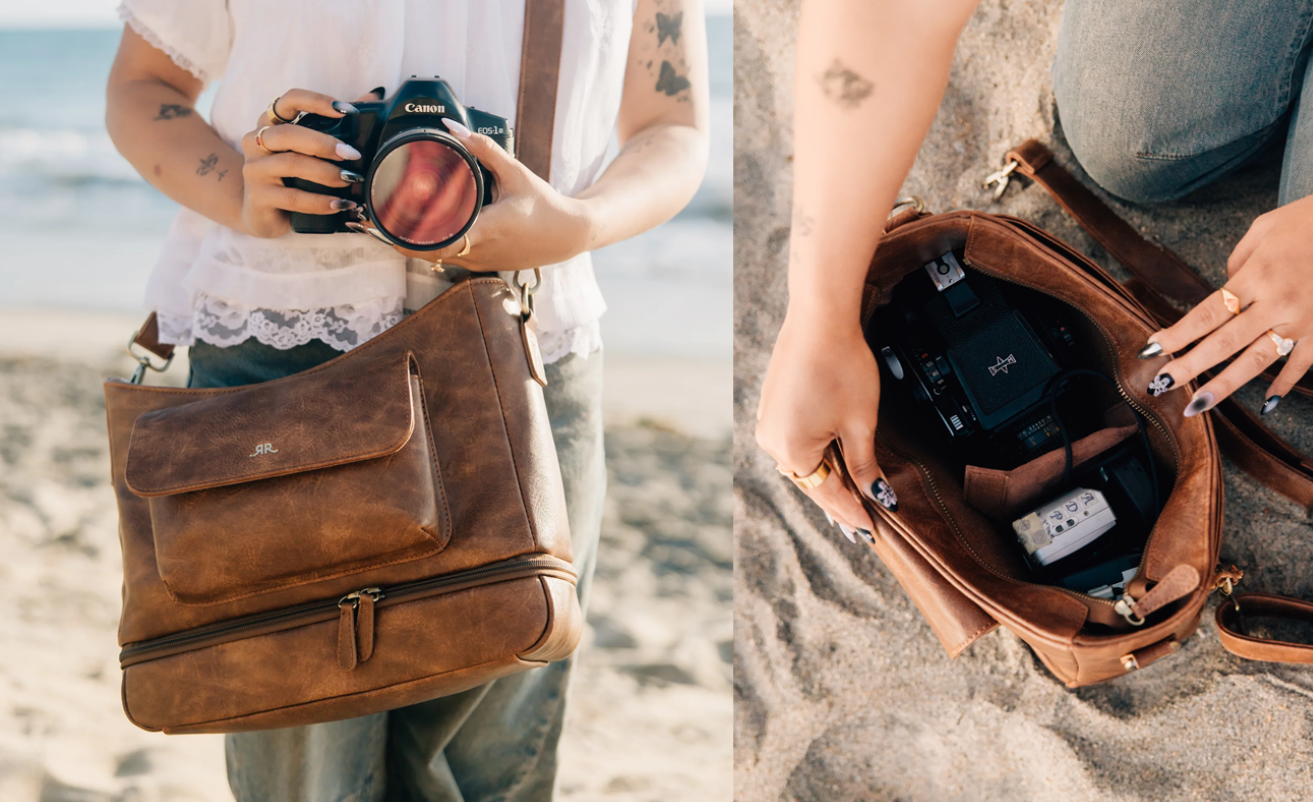
Perhaps the most memorable detail is the Anissa D. coin attached to the back. Beyond its decorative role, this small metal detail is designed to help open the battery compartment on compatible film cameras. It is a modest feature, but it illustrates the kind of specific inconvenience the collection attempts to address.
The companion Film Holder and Mini Film Holder extend that attention to detail. The larger holder accommodates up to four rolls, while the smaller version holds up to two. Both can be clipped to a camera bag or stored inside it, with prices starting at $28.99.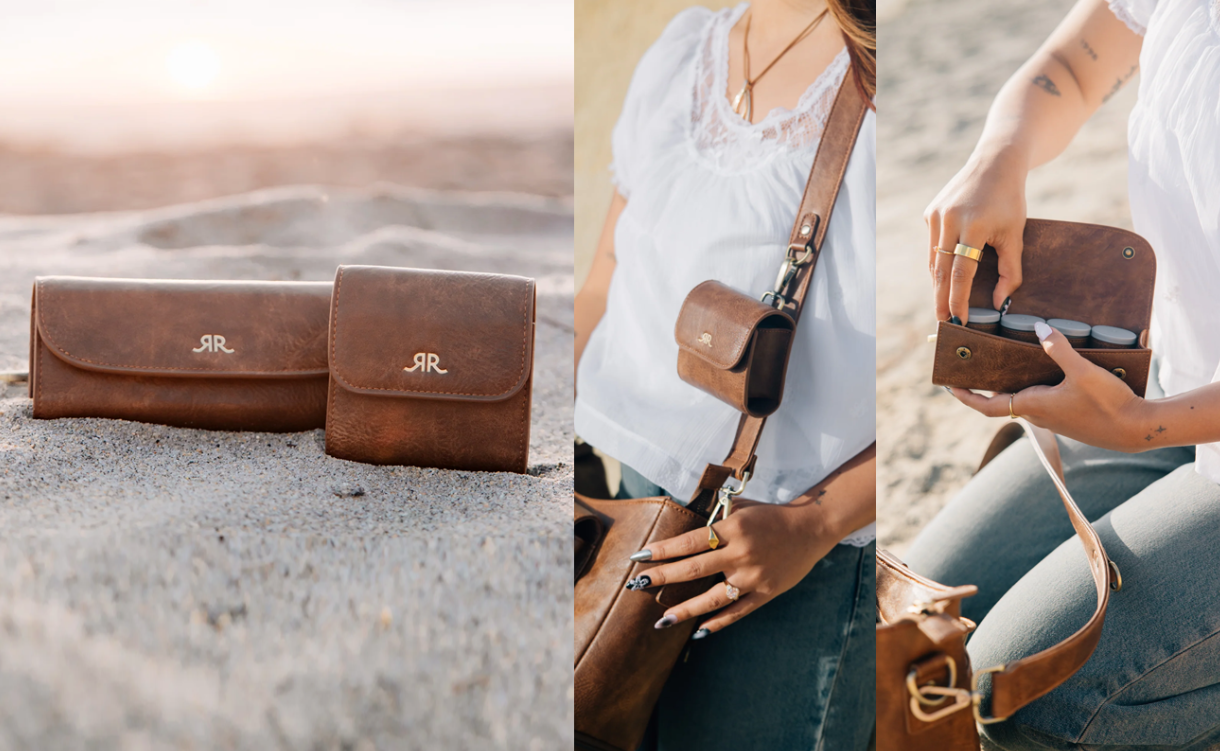
These accessories are not essential for everyone. Photographers who occasionally shoot a single roll may find a simpler pouch sufficient. For frequent film users, however, having dedicated storage can help keep spare rolls separate, organized, and readily available.
The Anissa collection also demonstrates that Ruby+Rae is willing to develop specialized products rather than applying one universal layout to every photographer.
6. The Details You Notice After Hours of Shooting: Organization, Materials, and Everyday Use
A camera bag can look impressive when empty. Its real usefulness becomes clearer when it is repeatedly opened, adjusted, carried, and packed during a demanding photography session. Ruby+Rae appears to recognize this through its smaller organizational accessories.
The Backup, priced at $34.99, is a good example. It accommodates nine memory cards, two camera batteries, three additional card slots, and small zippered storage. Instead of leaving small essentials scattered across several bag pockets, photographers can consolidate them into one removable organizer.
This arrangement can be particularly useful when switching between a backpack and a smaller shooting bag. Rather than reorganizing individual batteries and cards, the organizer can be transferred with the equipment.
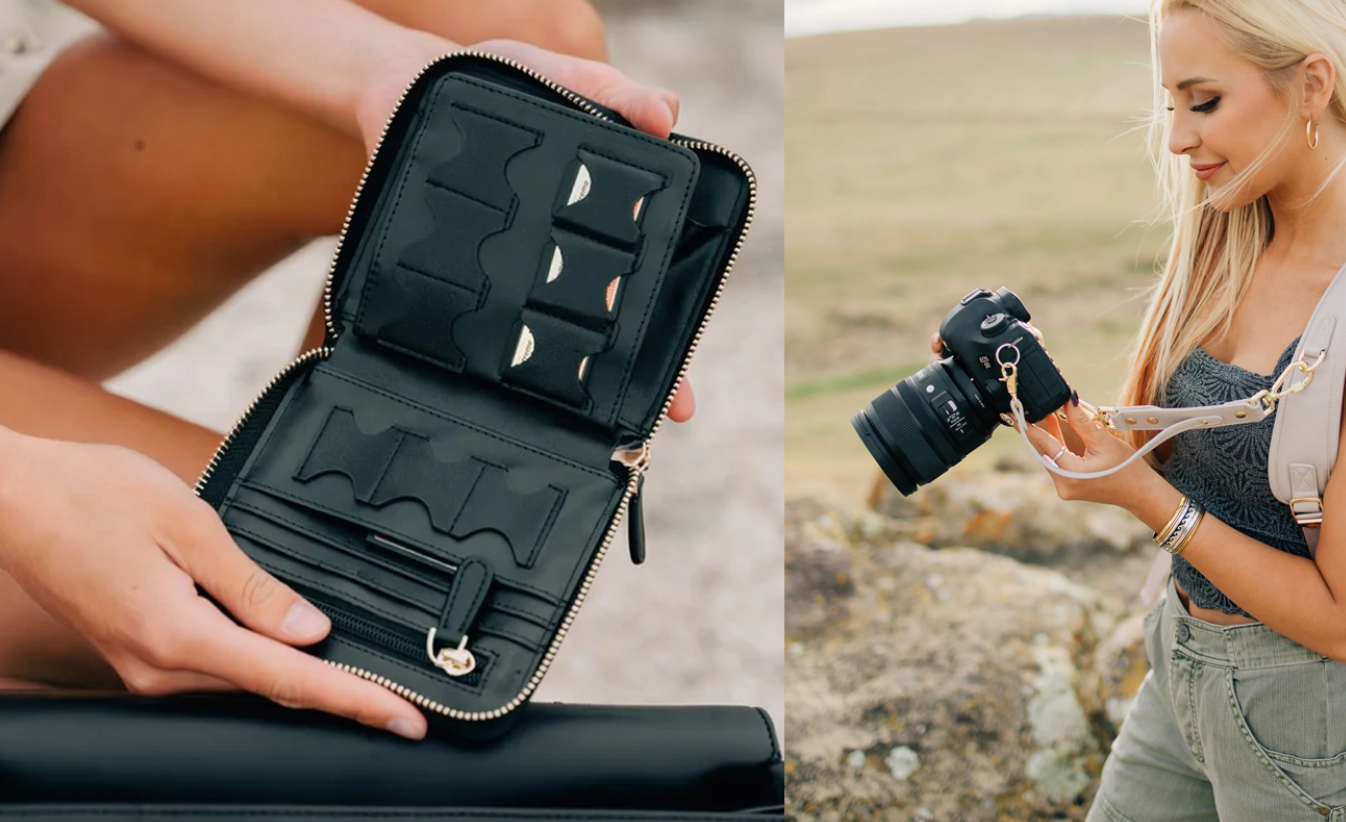
Another useful addition is the Camera Attachment Strap, priced at $19.99. It is designed to connect a camera to compatible backpack attachment rings, allowing photographers to keep their camera accessible without relying entirely on a traditional neck strap. Buyers should confirm attachment compatibility, since this accessory is not automatically included with the backpacks.
Material choice also deserves attention. Ruby+Rae uses premium faux leather rather than genuine leather. This contributes to its recognizable appearance and allows straightforward surface cleaning with a damp cloth, but the bags are not waterproof. Anyone regularly working in heavy rain, dusty outdoor environments, or difficult terrain should consider additional protection.
Customer feedback on the brand's website is generally encouraging, particularly regarding appearance, practical storage, and convenience. Some buyers describe being able to carry essential accessories comfortably, while others appreciate the coordinated designs. However, individual reviews also mention concerns involving snaps, zippers, carrying weight, or specific fit requirements.
These reports are useful observations rather than controlled durability tests. There is not enough independent long-term evidence to establish how every model will perform after years of intensive professional use. The sensible approach is to appreciate the thoughtful design while checking the details that matter most for your particular equipment.
7. Building the Right Ruby+Rae Setup Without Paying for Gear You Do Not Need
The strongest reason to consider Ruby+Rae is not that every product is indispensable. It is that the collection allows photographers to assemble a carrying setup around how they actually work.
For a portrait photographer who mainly uses one camera and carries relatively few accessories, the Sidekick at $89.99 may provide the best starting value. Adding The Backup is worth considering when memory card and battery organization are recurring frustrations, but there is little reason to buy a complete collection immediately.
A wedding photographer regularly switching between two camera bodies has a different set of priorities. For that buyer, the complete Duo is potentially more useful than a second general-purpose camera bag. A larger backpack can then remain the transportation solution for backup lenses, lighting equipment, chargers, and personal belongings.
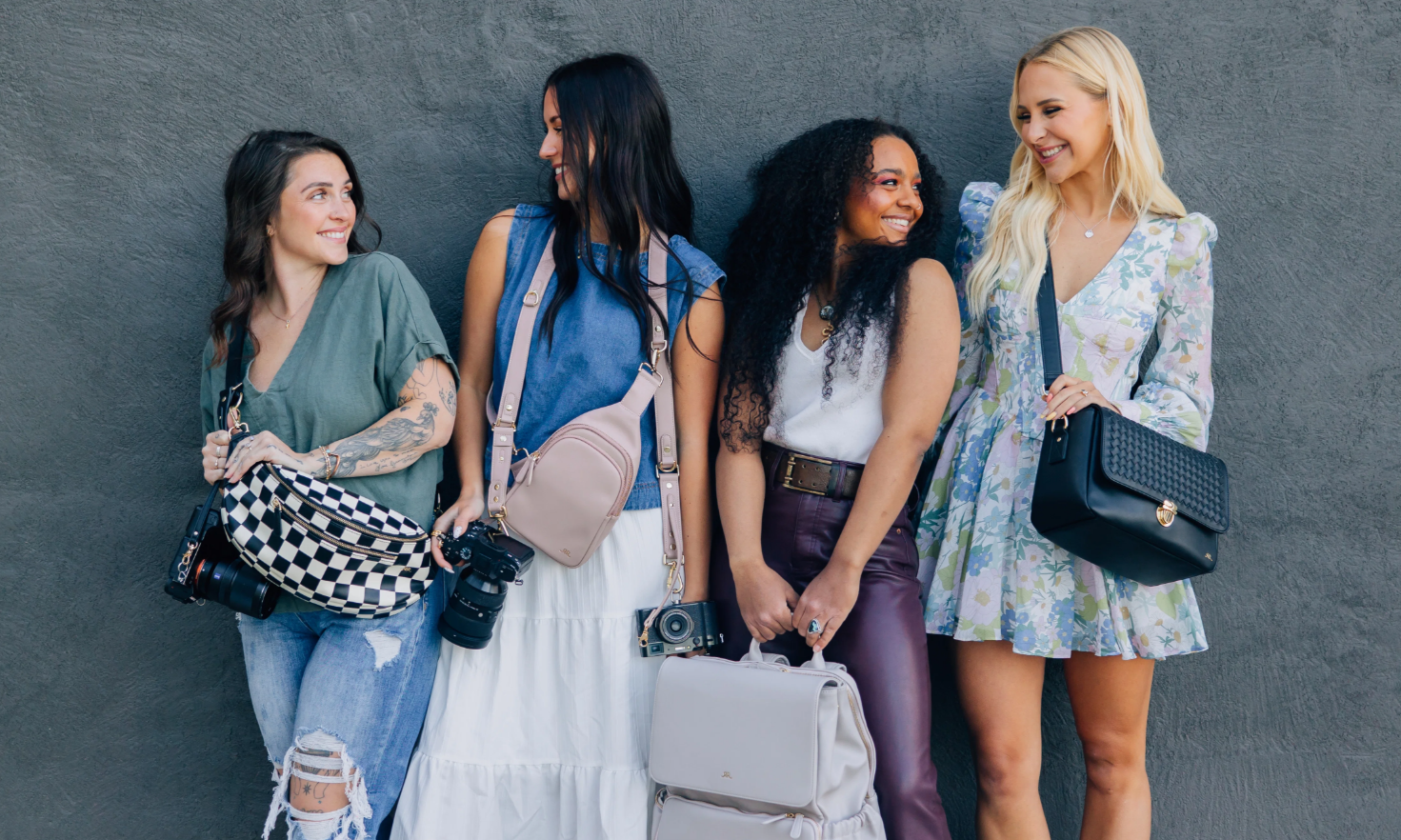
For travel photographers, the backpack decision deserves more consideration. Ruby offers convenient separation of camera equipment and other belongings, while Rae and Lyla provide configurable main compartments. Those who carry a laptop, multiple lenses, and personal travel essentials should compare the actual internal layout rather than choosing solely by exterior dimensions.
Film photographers may find the Anissa Film Bag more relevant than any conventional backpack, especially when they regularly carry several rolls and appreciate dedicated analog accessories.
Pricing also needs to be considered beyond the main bag. Camera attachment straps, memory card organizers, and film holders are generally separate purchases. The collection does not require subscriptions or regular branded refills, so ongoing ownership costs are mainly associated with optional accessories, maintenance, or replacing worn components. The greater financial consideration is choosing the correct configuration at the outset.
There are also several purchase policies worth understanding. Ruby+Rae advertises free U.S. shipping on orders over $150, while in-stock orders generally ship within two business days. International orders may incur customs or duty charges.
The brand offers a 90-day limited product warranty covering qualifying damage beyond ordinary wear and tear. Its return policy allows customers to request a return within 14 days of delivery, provided the item meets its unused-condition and packaging requirements. Sale items and gift cards are excluded from standard returns.
Importantly, Ruby+Rae states that it is not responsible for damage to camera equipment while using its products. Photographers should inspect attachment hardware, confirm that lenses fit securely, and consider appropriate insurance for valuable equipment.
Ultimately, Ruby+Rae makes the most sense for buyers who see organization, convenience, and personal presentation as connected parts of the photographic experience. It may be less suitable for photographers who prioritize waterproof construction, highly specialized outdoor protection, or the lowest possible price.
The best Ruby+Rae purchase is not necessarily the largest bag or the most expensive setup. It is the one that removes the most friction from the way you already shoot.
Find Your Ruby+Rae Setup for the Next Shoot
The appeal of Ruby+Rae lies in bringing thoughtful organization and understated style into the same carrying system. Whether you need the accessible Sidekick, the dual-camera flexibility of the Duo, a versatile backpack, or dedicated film storage, the collection offers options for different photographic routines.
Before choosing, consider your camera configuration, essential accessories, preferred carrying style, and how much equipment you actually use during a typical session.
You can explore the collection, compare available colors and configurations, and check current prices directly at Ruby+Rae.
A well-chosen camera bag should make your gear easier to manage, letting you spend less attention on what you carry and more on the moments you want to capture.
What we like
- Thoughtful designs created around photographers' everyday workflows
- Sidekick combines crossbody storage with a camera-carrying system
- Duo offers a practical dual-camera harness for wedding and event photography
- Ruby, Rae, and Lyla backpacks accommodate different equipment loads
- Removable dividers make organizing camera gear more flexible
- Anissa Film Collection includes clever film-specific storage details
- Stylish vegan leather, soft interiors, and coordinated accessories
- The Backup keeps memory cards and batteries neatly organized
What could improve
- Faux leather exterior is not waterproof
- Full Duo system costs more than its advertised starting price
- Backpack camera attachment straps may require separate purchases
- Camera and lens fit should be checked before ordering
- The 90-day warranty and 14-day return window are relatively limited