Our score
8.9/10
Source
CGReviewHub
Category
Health & Wellness, Lifestyle
Editorial review
Our honest review
Protein powder has a strange problem. People buy it because they want to take better care of themselves, yet many eventually find themselves staring at the same half-finished tub in the kitchen. The nutrition might be excellent, but another chalky vanilla shake after another workout is not exactly something to look forward to.
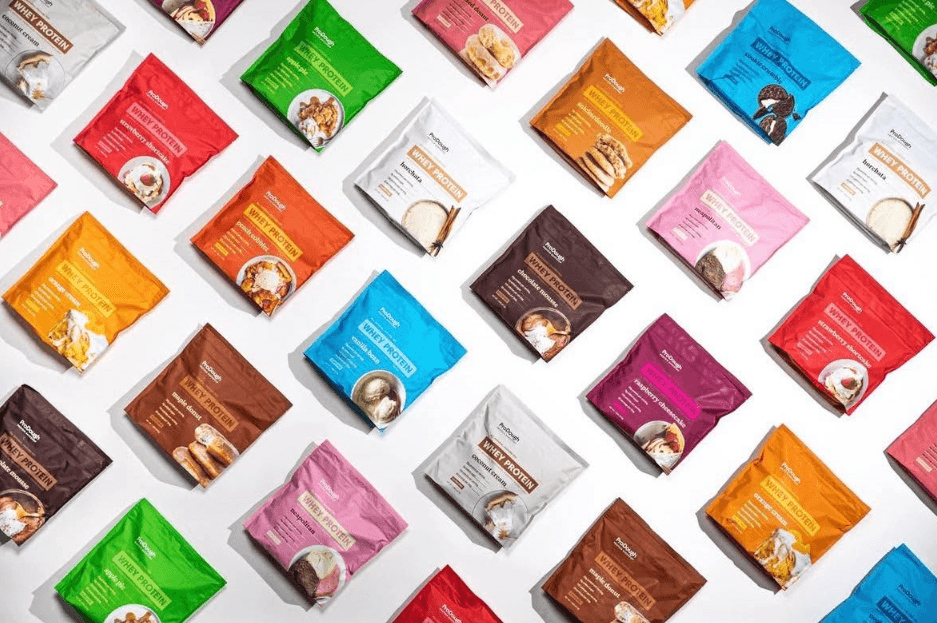
ProDough approaches that problem from a different direction. Instead of making protein feel like another obligation on your fitness checklist, the brand borrows inspiration from bakeries, coffee shops, and dessert menus. Think Chocolate Mousse, Raspberry Cheesecake, Maple Donut, and Horchata rather than the predictable handful of flavors found in many supplement aisles.
But this ProDough review is about more than an interesting flavor menu. Behind the colorful packaging is a collection of whey protein powders, plant-based options, beef protein, pancake mixes, protein donuts, and other products intended to make higher-protein eating more enjoyable.
The real question is whether ProDough offers something genuinely useful beyond its appealing dessert-inspired concept. To answer that, we need to look at the nutrition, ingredients, everyday versatility, customer experiences, and long-term cost, including the details that matter before ordering your first bag.
1. A Protein Brand That Thinks Like a Bakeshop
Most protein brands begin with a familiar promise: more protein, better recovery, and support for your fitness goals. Their packaging tends to emphasize performance, muscle development, or technical formulas. ProDough takes a noticeably different approach. Its identity as a Protein Bakeshop places everyday eating experiences at the center of the conversation, with nutrition built into products that resemble familiar breakfast foods and desserts.
That distinction matters because convenience alone is not always enough to build a lasting habit. A protein shake may be easy to prepare, but enjoyment can influence whether someone continues using it consistently. ProDough's appeal comes from making the same basic nutritional goal feel more flexible. A serving of protein might become part of a morning latte, a bowl of Greek yogurt, an afternoon smoothie, or an ice cream recipe after dinner.
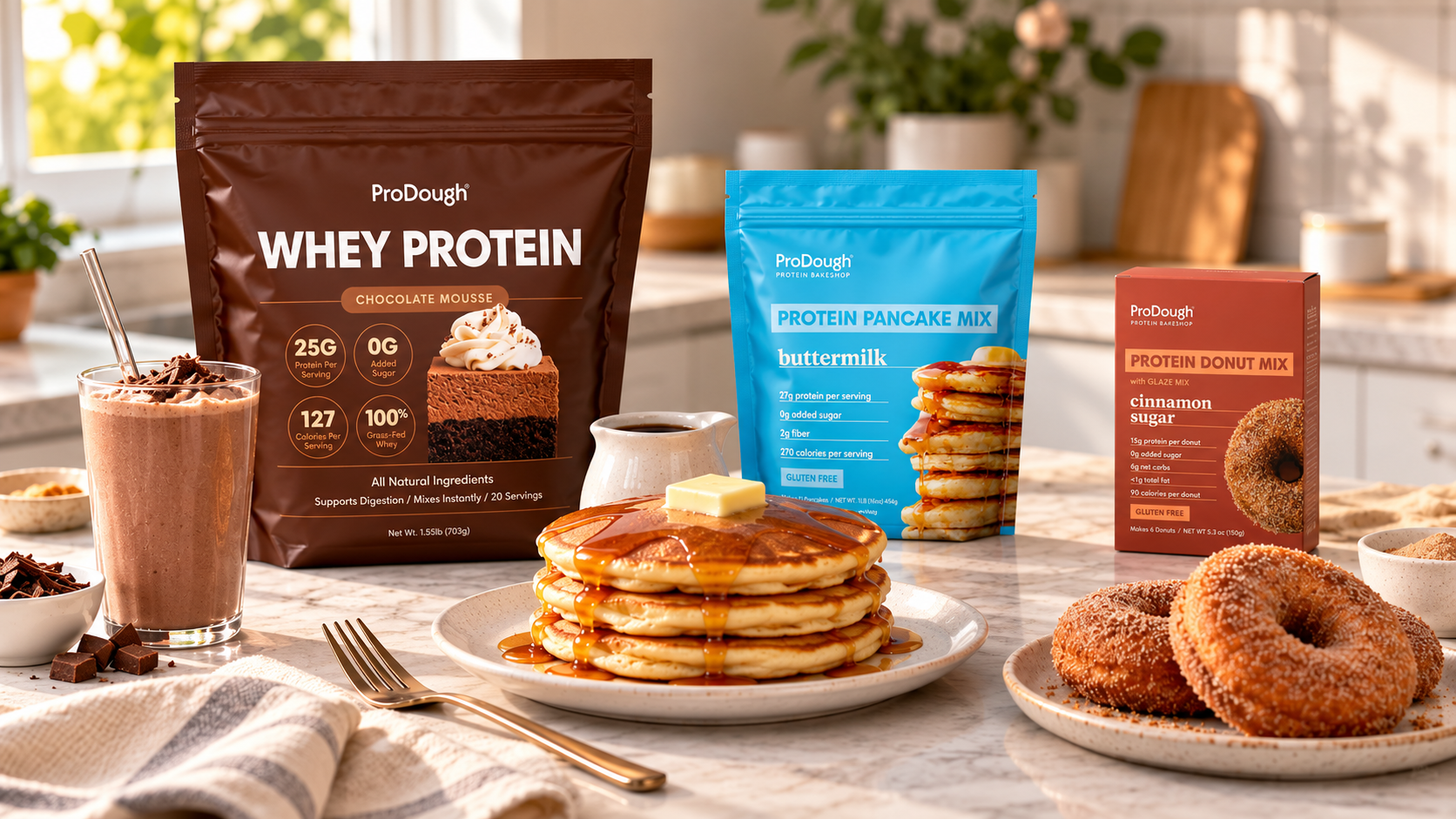
The concept becomes more convincing when you explore the wider catalog. Beyond its Gourmet Whey Protein Powders, ProDough sells pancake and waffle mixes, crepe mixes, oatmeal products, donut mixes, and cake or cupcake options. These are not simply different package sizes of the same supplement. They represent different occasions when someone might want to incorporate more protein into an existing routine.
Of course, having protein in a dessert does not automatically make that dessert nutritionally equivalent to a balanced meal. Ingredients, serving sizes, toppings, and preparation all matter. Still, the broader idea is appealing: people should not have to choose between enjoying what they eat and paying attention to their protein intake.
That is the central reason ProDough deserves consideration. It is selling more than a scoop of powder. It is selling the possibility of making protein-rich eating less repetitive.
2. The Dessert-Inspired Flavor Menu: Where ProDough Gets Interesting
Flavor variety is arguably ProDough's most recognizable strength. While many brands offer chocolate, vanilla, and perhaps a few seasonal variations, ProDough has developed an extensive menu built around familiar desserts, baked goods, and café favorites.
Its Gourmet Whey Protein collection includes approachable choices such as Chocolate Mousse, Vanilla Bean, and Chocolate Peanut Butter alongside more adventurous flavors like Raspberry Cheesecake, Cinnamon Roll, Peach Cobbler, Blueberry Muffin, Horchata, and Maple Donut. The brand markets a selection of more than 30 flavors, although the options available for purchase can change.
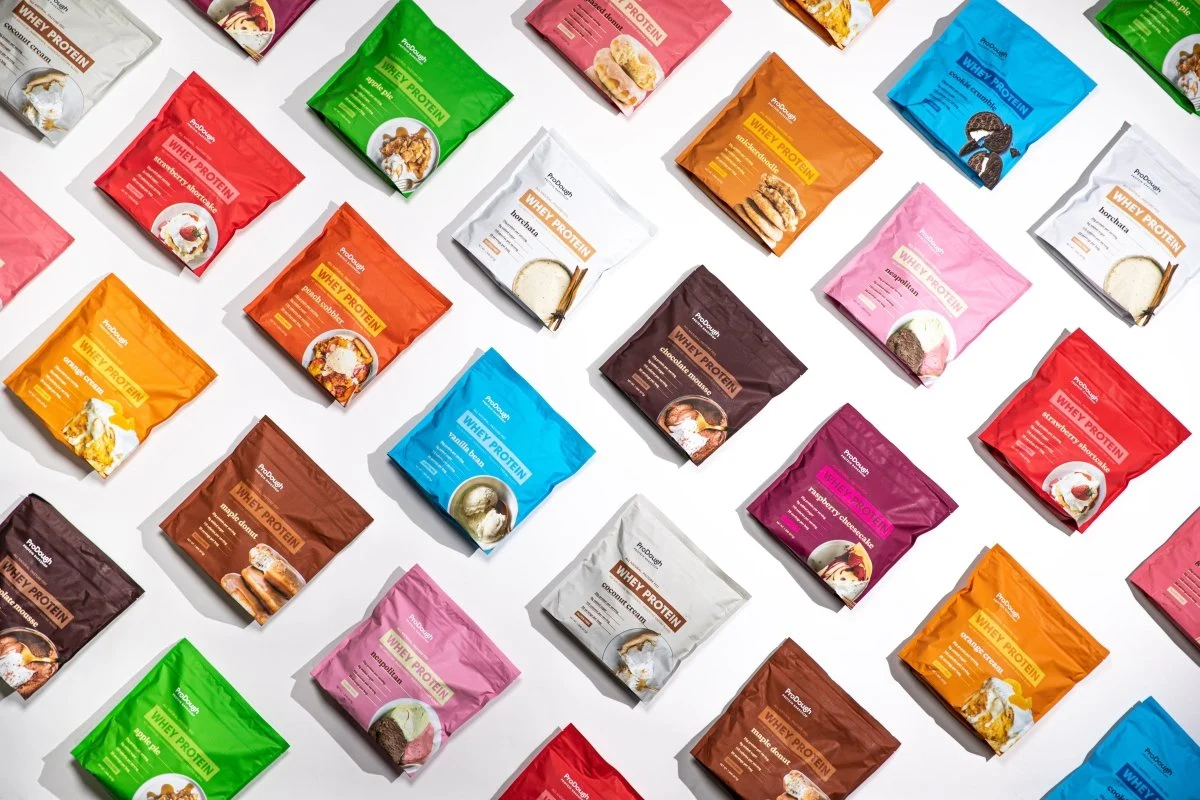
The important difference is not simply the number of flavors. It is how those flavors could fit into different recipes. Chocolate Mousse is an intuitive choice for someone who enjoys chocolate shakes or pudding-style desserts. Horchata has an obvious connection to cinnamon-inspired drinks, while Raspberry Cheesecake could be interesting in chilled yogurt or homemade frozen desserts. Maple Donut and Cinnamon Roll may be particularly appealing to people who enjoy sweeter breakfast-inspired flavors.
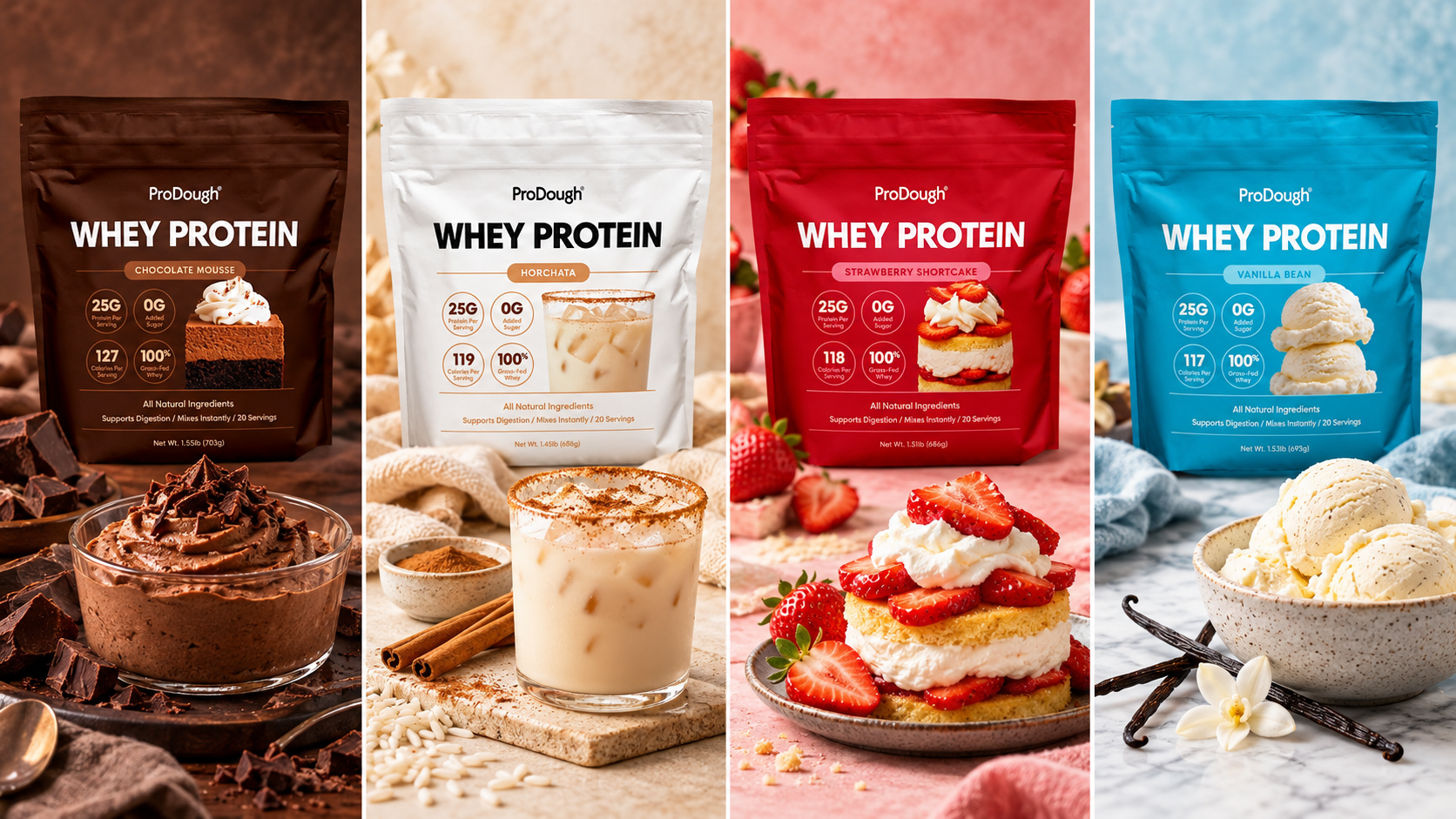
For a first purchase, however, more choices do not necessarily make choosing easier. Dessert-inspired protein powders often deliver a stronger sweetness profile than plain or lightly flavored whey. Someone who enjoys sweetened coffee drinks might find that appealing, while a person accustomed to unsweetened protein could consider the same flavor overwhelming.
Customer feedback supports that distinction. Some buyers enthusiastically describe particular flavors as enjoyable in shakes, yogurt, and homemade ice cream. Others report that certain fruit-inspired or bakery flavors taste overly sweet or leave a noticeable sweetener aftertaste. These experiences are subjective, but they are valuable reminders that an attractive flavor name cannot predict how a product will taste to every individual.
A practical strategy is to begin with familiar flavors rather than buying the most unusual option immediately. Chocolate Mousse or Vanilla Bean may be more versatile starting points, while a more distinctive flavor can be explored through a single-serving sample. This lets the variety work in your favor instead of turning your first purchase into an expensive guessing game.
3. Behind the Sweet Taste: Whey Isolate, Protein Density, and Ingredients
A creative flavor menu would mean very little if the underlying nutrition were disappointing. Fortunately, ProDough's flagship whey has a reasonably strong nutritional foundation.
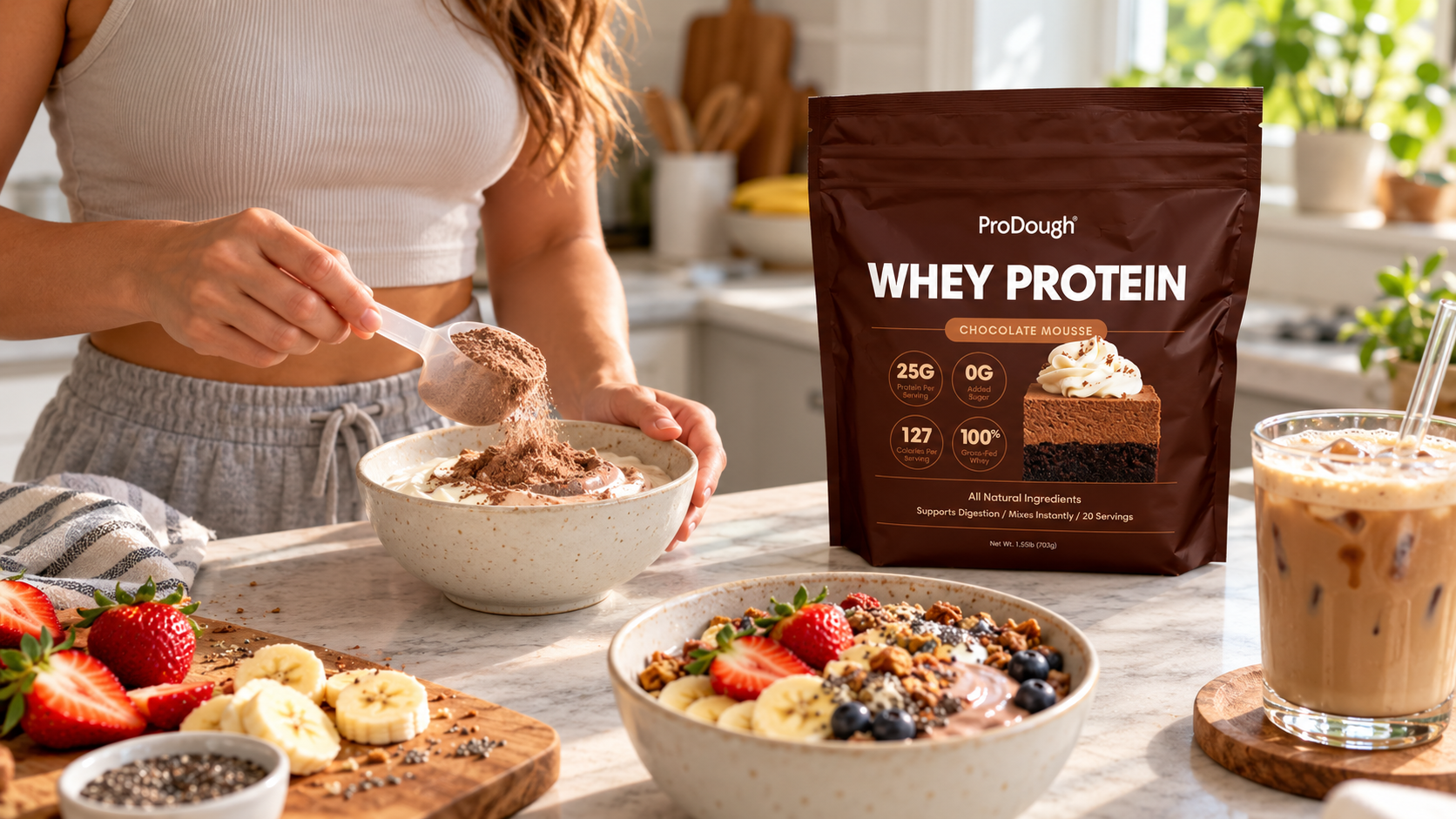
According to the brand, its Gourmet Whey Protein uses microfiltered whey protein isolate sourced from grass-fed dairy. A serving provides approximately 25g of protein and 110-125 calories, depending on the formula, with about 2g of net carbohydrates and no added sugar. Each full-size bag contains 20 servings.
Whey isolate is an established protein ingredient, generally processed to remove more fat and lactose than whey concentrate. This can produce a protein-dense powder without requiring a particularly large serving. It also makes isolate an attractive choice for people who want additional protein without adding substantial calories from the powder itself.
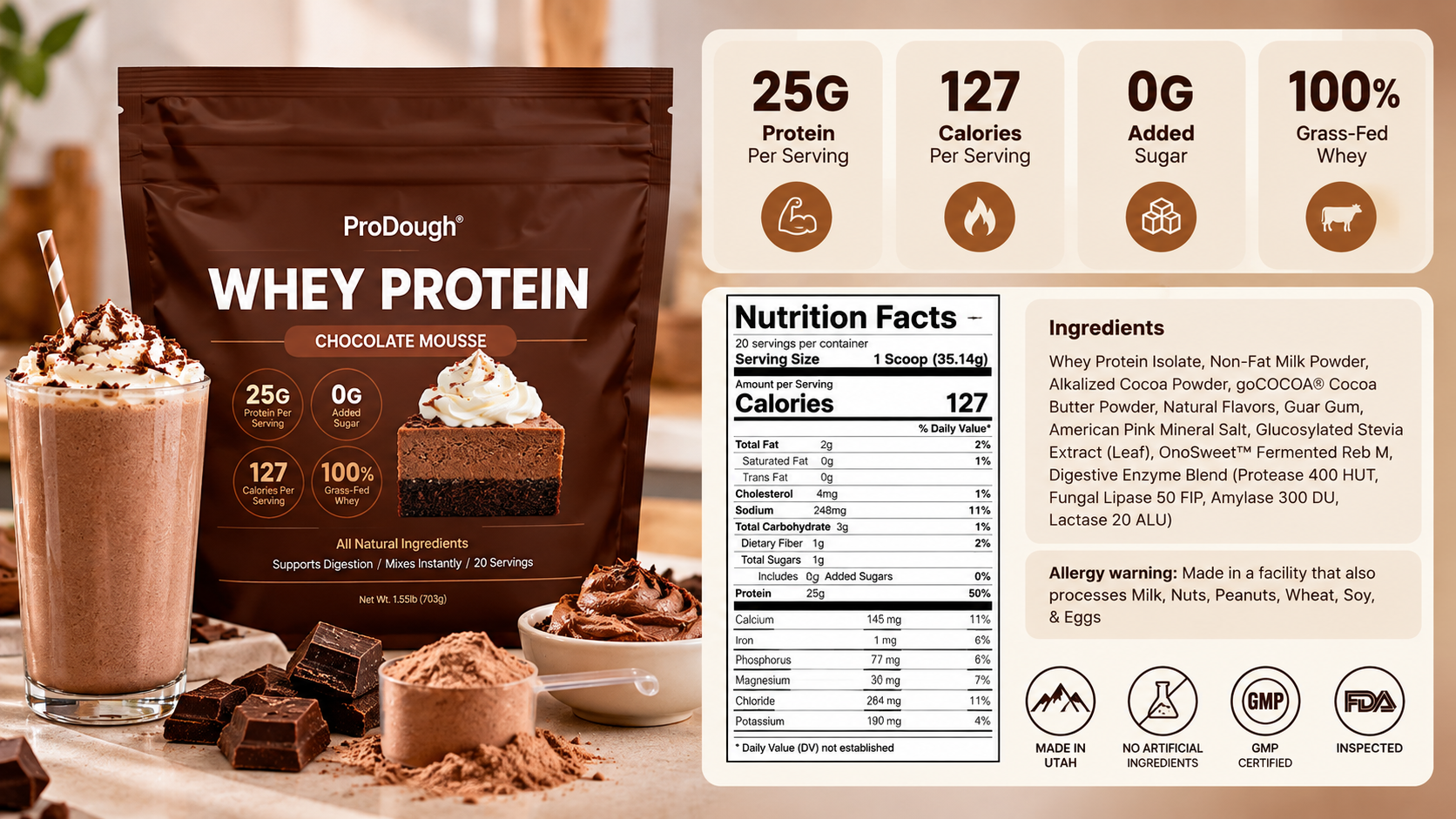
Protein quality also has a broader scientific context. The International Society of Sports Nutrition identifies approximately 20-40g of high-quality protein per serving as a useful general range in sports nutrition, depending on individual circumstances. ProDough's 25g serving falls comfortably within that range. However, this general evidence for protein does not establish that ProDough produces better muscle growth or recovery than competing products providing similar nutrients.
The brand also promotes a proprietary digestive enzyme blend intended to improve the experience of consuming protein. That is an interesting formulation choice, but the presence of digestive enzymes does not guarantee freedom from bloating or digestive discomfort. Individual tolerance depends on many factors, and evidence about protein digestion generally should not be mistaken for clinical proof of ProDough's exact formula.
Another detail worth understanding is the distinction between low lactose and dairy-free. Whey isolate typically contains less lactose than whey concentrate, but it remains milk-derived protein. People with a milk protein allergy should not treat whey isolate as a safe alternative, and those with significant lactose sensitivity should examine the specific label and their own tolerance carefully.
Similarly, no added sugar does not mean a product has no sweeteners or that every flavor has the same nutritional profile. Ingredient lists can differ, and the appropriate way to evaluate a particular bag is to read its actual Nutrition Facts and allergen information.
The strongest nutritional argument for ProDough is relatively straightforward: it provides a meaningful serving of whey isolate protein in a formula designed to feel more indulgent. Its value does not depend on extraordinary health claims.
[CAPTION NÊN DÙNG: "Nutrition values vary by formula and flavor. Always check the product label for current ingredients, allergens, and serving information."]
4. Beyond the Shaker: Coffee, Greek Yogurt, and Ninja Creami
This is where ProDough becomes more interesting than a typical protein supplement. Its flavor profiles are designed to be useful in foods and drinks people may already enjoy, creating opportunities to incorporate protein without relying on a conventional shake every day.
Consider Greek yogurt. Plain Greek yogurt already provides protein, but some people find its natural tartness difficult to enjoy without additional flavoring. Mixing a suitable amount of ProDough powder into yogurt could create a thicker, dessert-like bowl with additional protein. Chocolate Mousse, Raspberry Cheesecake, and other sweet flavors make sense in this context because they complement the creamy base.
There is a practical consideration, though. Adding too much powder to a small quantity of yogurt can produce a heavy, paste-like consistency. Beginning with a partial serving and adjusting gradually is often more sensible than assuming a full scoop will work in every recipe.
Protein coffee is another appealing possibility. Flavors such as Iced Mocha and Horchata have a natural connection to café-style drinks. But whey powder can clump when introduced directly into very hot liquid. Preparing a smooth mixture with cool liquid before incorporating it into coffee may improve the result, particularly for iced drinks.
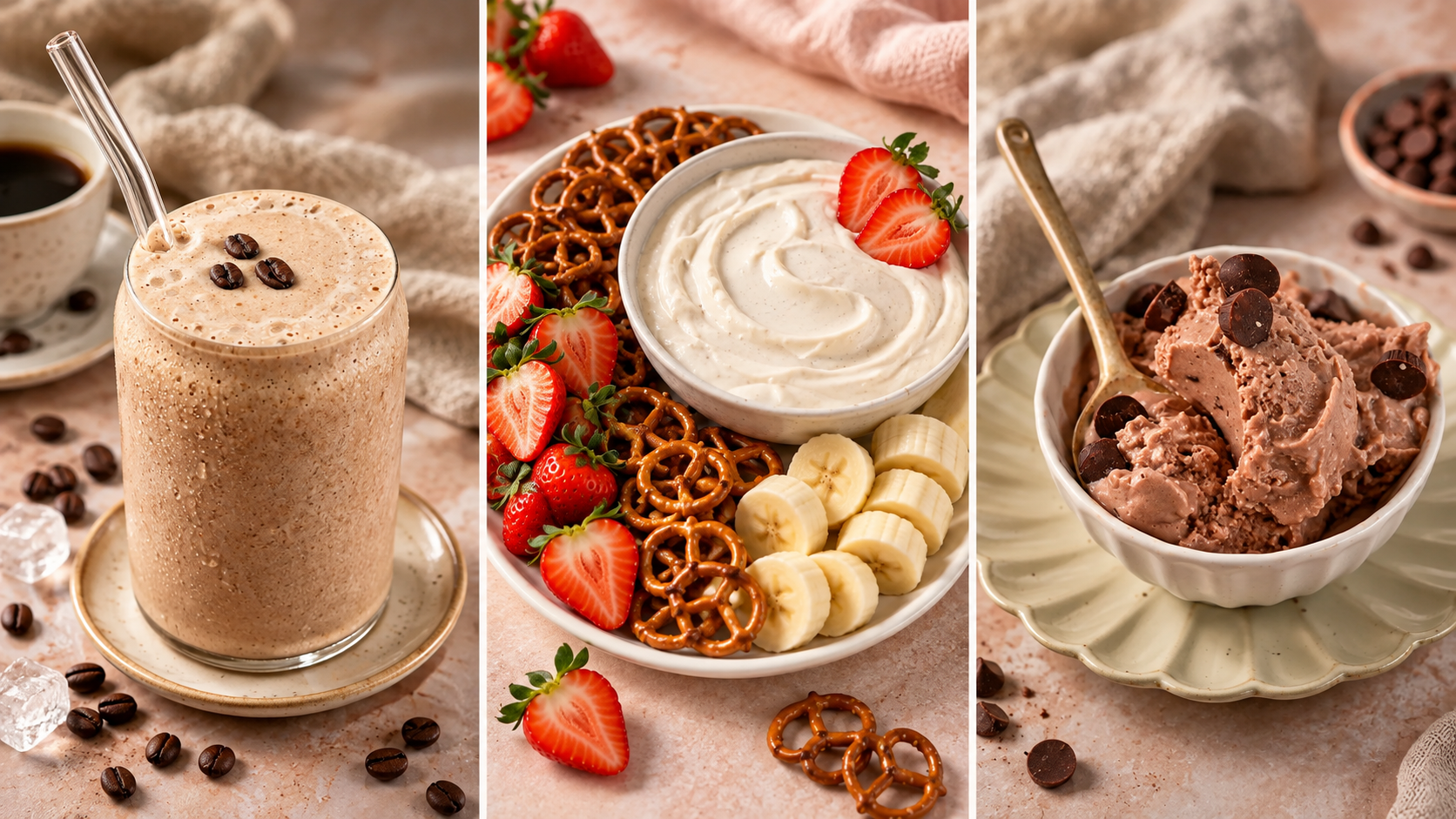
For people who own a Ninja Creami, dessert-inspired protein powders can serve another purpose. Chocolate, vanilla, cheesecake, and fruit flavors can be incorporated into frozen mixtures, creating homemade protein ice cream with flavors that are more difficult to achieve using basic unflavored whey alone.
ProDough also publishes recipes involving protein desserts and other creative uses for its products. These offer helpful starting points for experimentation, although the final nutritional totals depend on the milk, yogurt, fruit, sweeteners, and other ingredients used.
Versatility is where the premium price begins to make more sense. A product used only for occasional shakes may be difficult to justify at a higher cost. A flavor that regularly works in breakfast bowls, coffee, smoothies, and homemade desserts has more opportunities to become part of a routine.
For someone who enjoys preparing food, that distinction is significant. The product becomes an ingredient rather than another supplement waiting in the cupboard.
5. From Pancake Mornings to Protein Donuts: The Other Half of ProDough
It would be easy to evaluate ProDough entirely through its whey powders, but doing so would overlook an important part of the brand's identity. Its baking mixes turn the protein concept into actual meals and snacks rather than simply flavored beverages.
The Protein Pancake & Waffle Mixes are particularly relevant to people who already enjoy a traditional breakfast but want additional protein. The brand offers flavors including Buttermilk, Chocolate, Cinnamon Swirl, and Pumpkin Spice, with advertised protein and calorie totals varying by mix and preparation.
The appeal is understandable. Instead of preparing a separate protein shake alongside breakfast, someone can make pancakes or waffles that contribute protein themselves. This may be especially useful for people who prefer eating their calories rather than drinking them.
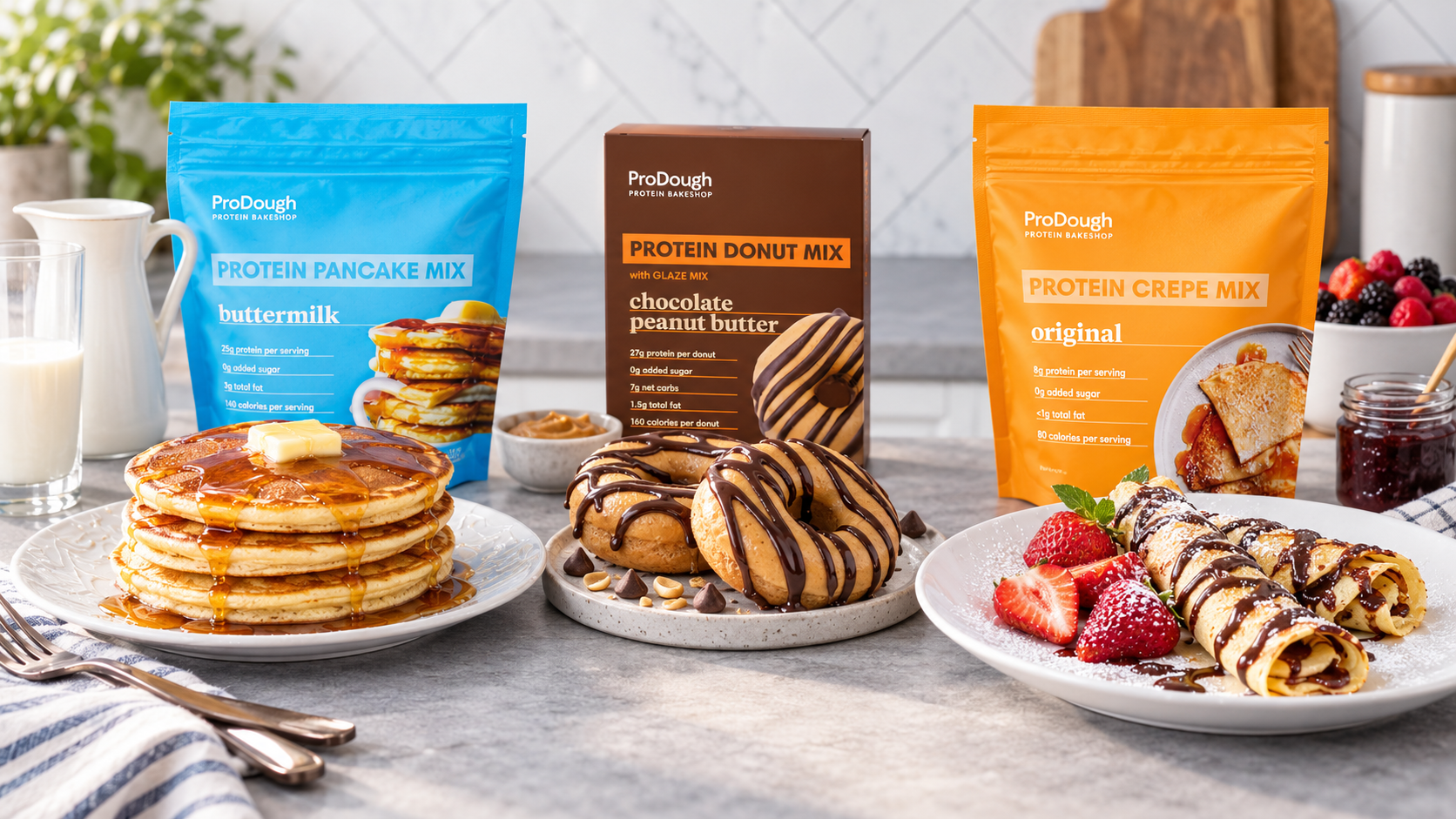
The donut mixes offer an even more distinctive experience. ProDough sells numerous dessert-inspired varieties, including Cinnamon Sugar, Lemon Poppy Seed, Birthday Cake, and Double Chocolate. According to its FAQ, one donut mix box makes six donuts, with enough included glaze mix to cover all six.
That sounds convenient, but there is a difference between opening a ready-to-eat protein bar and preparing homemade donuts. The mixes require following a recipe, adding the appropriate wet ingredients, baking, cooling, and preparing the glaze. The brand specifically advises customers to follow its preparation instructions rather than freely substituting ingredients, because these changes can affect texture and taste.
For busy shoppers, that extra effort may be a drawback. For someone who enjoys weekend baking or preparing several snacks in advance, it can become part of the appeal.
The nutrition also deserves a careful reading. ProDough advertises approximately 15-27g of protein per donut across its different formulas, but the relevant serving information and preparation requirements should be checked for the specific flavor. Glazes, toppings, and additional ingredients can change the final nutritional total.
One more important detail: not every ProDough baking product is necessarily gluten-free. The company's FAQ identifies exceptions involving certain deluxe and cheesecake donut products. Anyone avoiding gluten for medical reasons should verify the individual package and allergen information.
The baking mixes are best viewed as protein-focused alternatives to familiar homemade treats, rather than proof that every donut or pancake is automatically a complete or superior meal. Their strongest advantage is the possibility of making protein intake feel more enjoyable without abandoning familiar foods.
6. Whey, Beef, or Plant? Finding the Right ProDough Formula
Although Gourmet Whey is the natural starting point for most buyers, ProDough also offers other protein sources. This makes the brand more flexible, but it introduces an important decision: choosing the right source of protein matters just as much as choosing the right flavor.
For most people who tolerate dairy and want an established sports nutrition ingredient, Gourmet Whey Protein is the most straightforward option. Whey naturally provides essential amino acids, including leucine, and has substantial research supporting its usefulness as a convenient protein source within an appropriate diet.
ProDough's Grass-Fed Beef Protein is positioned as a dairy-free alternative. The brand advertises 25g of protein and 100 calories per serving, using beef-derived protein alongside bovine collagen peptides. This could appeal to someone avoiding whey or lactose, particularly if they prefer individual stick packs.
However, collagen has a different amino acid profile from whey and should not automatically be regarded as an equivalent muscle-building protein source simply because the total protein number is similar. Buyers whose primary priority is maximizing high-quality protein for resistance training should consider the full formulation, not only the headline grams.
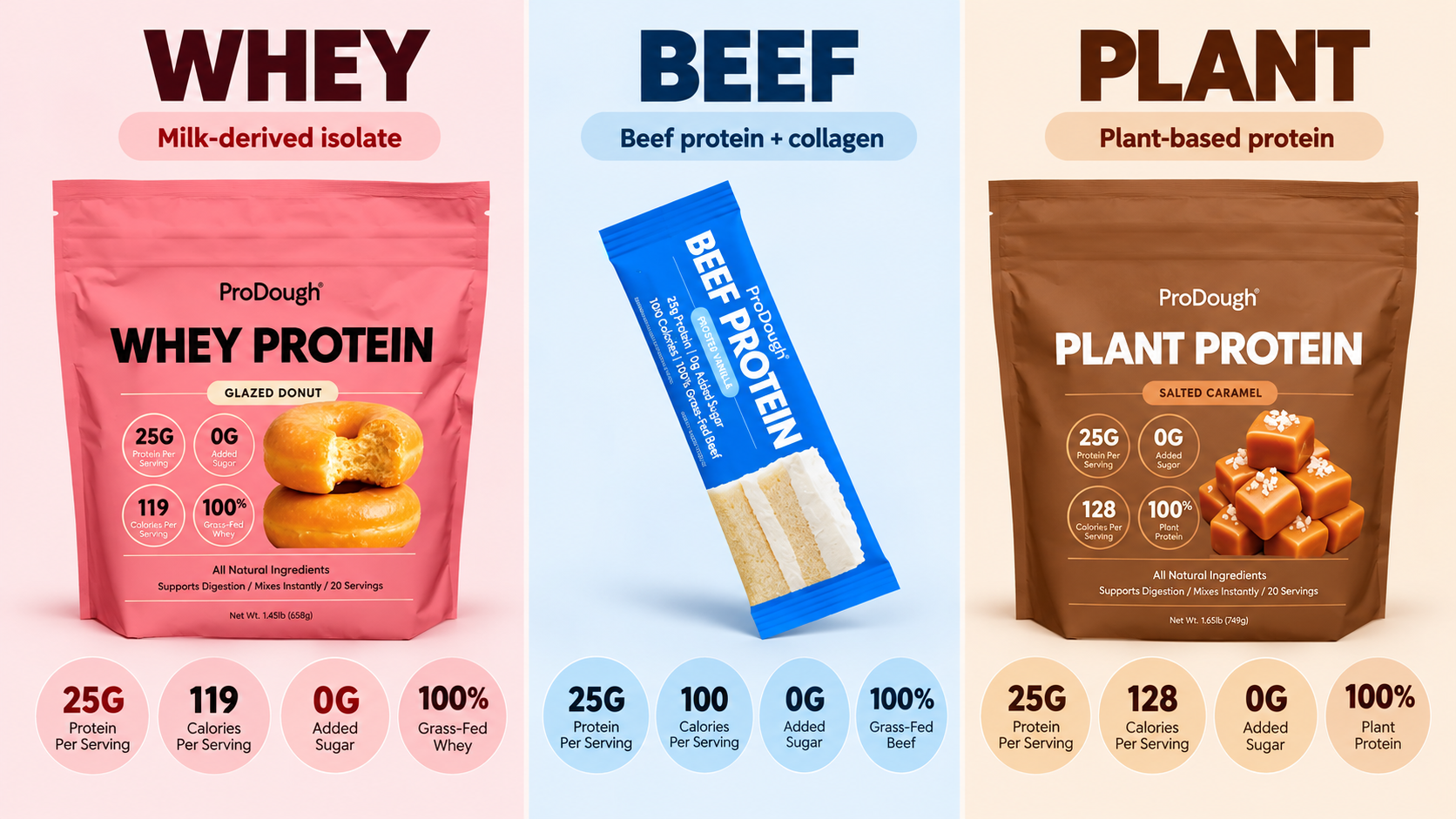
The Plant Protein line provides another alternative for customers who prefer plant-derived ingredients. Its listed flavors include Brownie Batter, Cafe Mocha, Salted Caramel, and Vanilla Cone, with the brand advertising 25g of protein and approximately 120-150 calories per serving.
Plant protein powders can behave differently from whey when mixed with liquid. They may feel thicker, grainier, or less creamy depending on the ingredients and preparation. ProDough's plant formula has also received more mixed customer feedback than its flagship whey, particularly regarding taste and texture.
The practical buying decision is therefore fairly simple. Choose whey when dairy is acceptable and familiar protein functionality matters most. Consider the beef formula when avoiding dairy, while examining its protein composition. Explore plant protein when plant-based ingredients are a priority, but pay close attention to texture preferences and the complete ingredient label.
Having three sources under one brand is useful. Treating all three as nutritionally interchangeable would be a mistake.
7. What Customers Actually Notice About Taste, Texture, and Mixability
Product descriptions can explain what a protein powder contains, but customer feedback is more useful for understanding how it behaves in everyday situations.
ProDough's Gourmet Whey product page displayed an overall rating of 4.6 out of 5 from 1,638 reviews during this review's research. That is a positive signal, although on-site ratings should be understood as customer feedback hosted by the seller rather than independent product testing.
The recurring praise centers on enjoyable flavors and the ability to use the powder in more than one way. Buyers describe incorporating it into oat milk, yogurt, breakfast bowls, and coffee. Some particularly appreciate having access to flavors that are difficult to find in conventional protein products.
There is also a meaningful difference between someone who enjoys a product mixed into milk and someone who prefers it with water. Milk and yogurt can soften sweetness, improve richness, and change the overall mouthfeel. A powder that seems overly intense in water might work well in a thicker dessert, while another flavor may taste best as a simple shake.
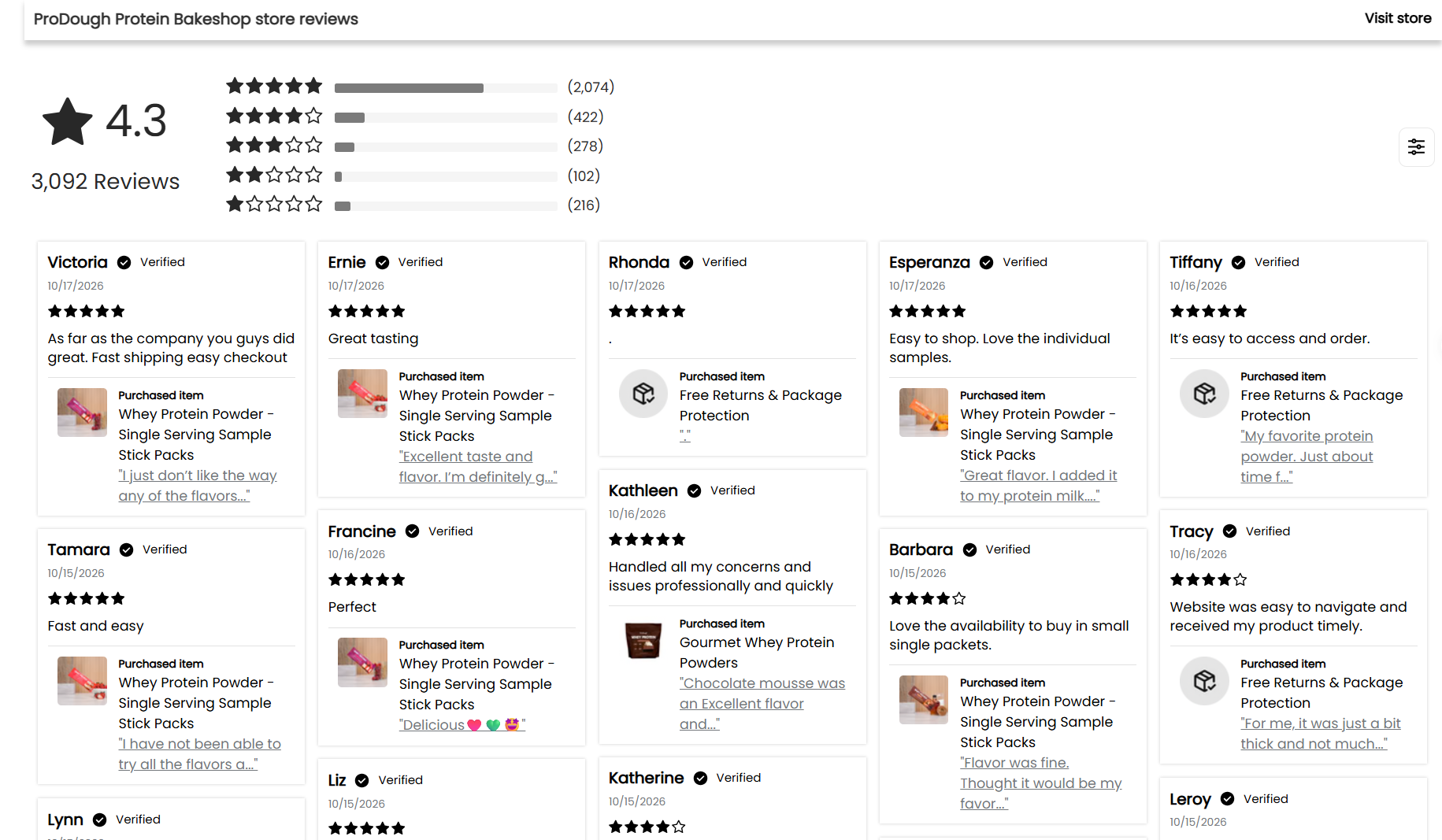
The negative feedback is worth considering as well. Some buyers find certain flavors too sweet or describe an artificial-tasting finish. Others mention clumping, particularly when mixing protein directly into hot coffee. These observations are not necessarily evidence of defective ingredients. They reflect the way flavor preferences and preparation methods influence the experience.
Independent Reddit discussions present a similarly mixed picture. Some users praise particular ProDough flavors in Greek yogurt and Ninja Creami recipes, while others strongly dislike the sweetness or aftertaste. Price is also a recurring concern, including among people who otherwise enjoy the products.
That balance is important. A favorable overall rating does not mean every flavor will suit every customer, and a negative personal experience does not establish that an entire product line is poor quality.
The most useful lesson from customer reviews is to approach flavor as a personal preference, not a guaranteed feature. The brand's variety creates plenty of opportunities to find a favorite, but it also makes sampling especially valuable.
For someone who enjoys sweeter desserts and experimenting with recipes, ProDough's flavor direction may be exactly what makes it appealing. Someone who strongly dislikes sweetened protein powders should be more cautious, regardless of how attractive the nutrition label looks.
8. Sample Sticks or Full Bags? The Real Cost of Finding Your Favorite
Price is one of the most important parts of a fair ProDough review because the brand's distinctive flavors come at a noticeable premium compared with many basic protein powders.
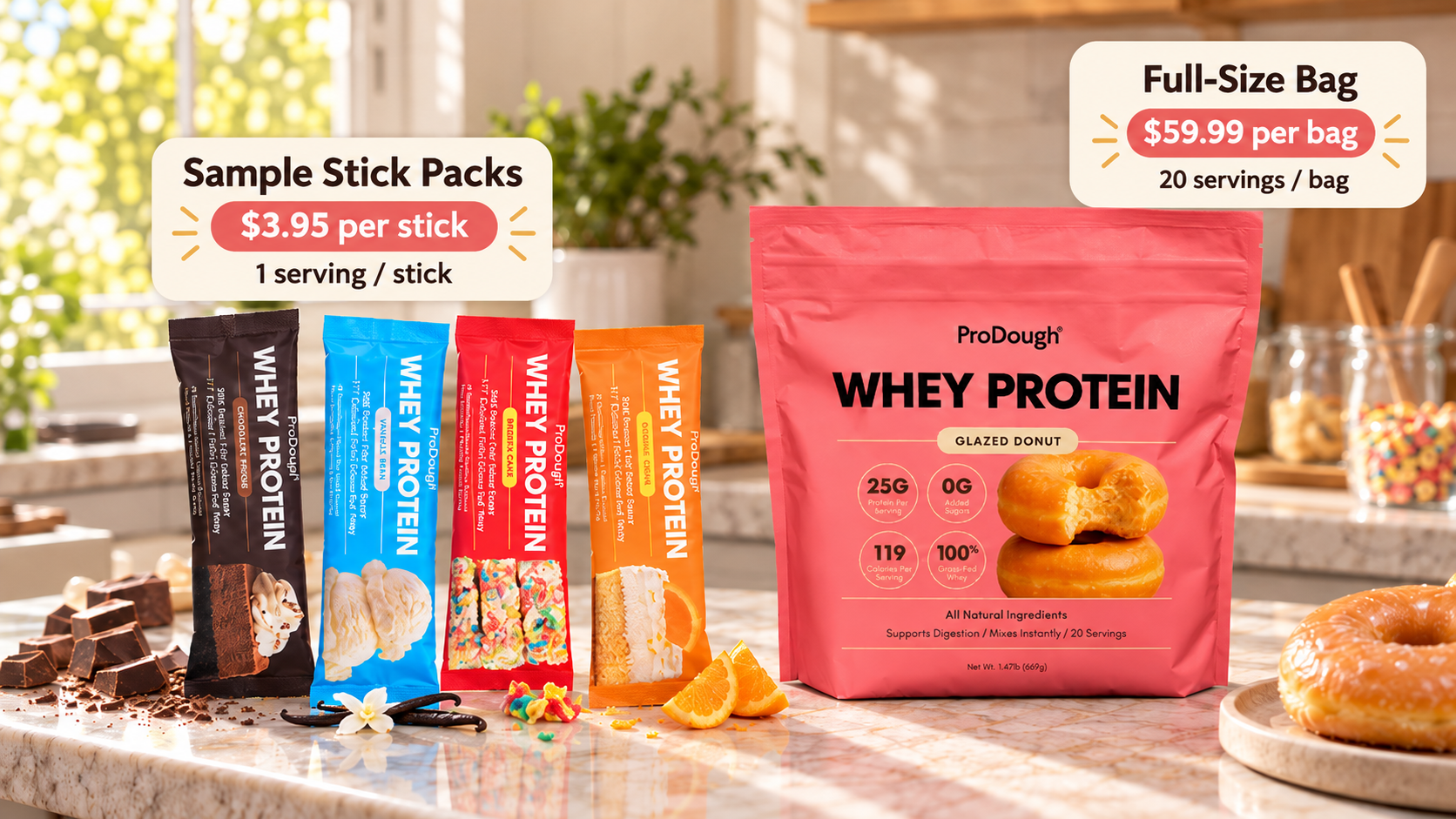
At the time of research, a full-size Gourmet Whey Protein bag was listed at $59.99 for 20 servings, equivalent to approximately $3.00 per serving before shipping, taxes, or discounts.
The brand also listed individual whey sample sticks at approximately $3.95 each. These cost more per serving than a full bag, but they offer a different advantage: the opportunity to explore flavors without spending nearly $60 on an unfamiliar option.
This is particularly important when the product's biggest selling point is also its most subjective characteristic. A flavor that sounds wonderful online may not be enjoyable enough to use twenty times.
The ongoing cost also deserves attention. At the listed full-bag price, someone using five servings each week would consume approximately 260 servings annually, equivalent to 13 bags and around $780 before discounts and shipping. Daily use would increase that expense considerably.
This does not necessarily make ProDough poor value. It means buyers should understand what they are paying for. A basic whey isolate may provide a comparable amount of protein for less money, whereas ProDough adds a distinctive flavor selection and the potential to use one product across shakes, drinks, and recipes.
The brand offers subscription purchasing options on certain products. These may reduce the cost per order, but customers should confirm the current discount, delivery frequency, and recurring payment terms before subscribing. ProDough's FAQ explains that subscription customers can manage upcoming shipments and cancellation through their account portal.
Shipping is another practical consideration. The website advertises free shipping on orders of $100 or more, so a single bag may not qualify. Adding products simply to reach that threshold is rarely worthwhile unless they are items you already intend to use.
For first-time customers, the most sensible approach is to compare sample availability, current product options, and subscription terms directly through ProDough before committing to a larger order.
The value equation becomes much more favorable once you know which flavors you genuinely enjoy and how frequently you will use them.
9. Who Will Get the Most Out of ProDough, and What Should You Check First?
ProDough is most compelling for people who enjoy food and see protein as something that should fit into their lifestyle rather than dominate it.
Someone who loves experimenting with homemade desserts might find considerable value in a powder that works across several recipes. A busy person who regularly prepares yogurt bowls or protein coffee may appreciate having a flavorful option that fits into a familiar routine. And someone who dislikes conventional protein shakes may find that a more dessert-inspired approach makes higher-protein eating less repetitive.
The wider bakeshop catalog also appeals to people who want variety beyond drinks. Protein pancakes and donuts are not necessary purchases, but they provide another way to incorporate protein into meals and snacks that might otherwise be relatively low in it.
There are also shoppers for whom ProDough may not be the ideal choice. If your primary objective is getting the lowest possible cost per gram of protein, a more basic formula could make better financial sense. If you prefer unflavored powders or dislike prominent sweeteners, ProDough's dessert-centered approach might be less appealing.
Before purchasing, there are several practical details worth checking.
First, examine the exact ingredients and allergen information for the product you select. The whey products contain milk-derived protein, while the baking mixes have their own ingredient requirements and potential allergens. Do not assume every product in the catalog shares identical dietary properties.
Second, consider how much preparation you are realistically willing to do. A bag of protein powder is simple to use, but a donut kit requires more time and attention. Buying around your actual routine is a better strategy than purchasing ingredients for recipes you may never prepare.
Third, understand the return policy. ProDough states that its 30-day refund policy applies to unopened and unused products, minus return shipping costs, with refund requests subject to the company's stated discretion. This is not the same as a taste satisfaction guarantee for opened products.
Shipping also requires some planning. The brand asks customers to allow approximately two to four days for order processing before the shipping and delivery period begins. If you are ordering for a specific event or need products by a certain date, remember that processing time is separate from transit time.
None of these considerations undermines ProDough's core appeal. They simply reinforce the importance of choosing the right formula, finding a flavor you enjoy, and understanding the cost before making a commitment.
Ultimately, ProDough is a particularly interesting option for buyers who value enjoyment and flexibility alongside nutrition. Its strongest achievement is not inventing a new reason to consume protein. It is finding more appealing ways to incorporate an established nutritional ingredient into everyday life.
Find Your Flavor at ProDough
The best way to approach ProDough is not to buy the largest collection of flavors immediately. Start by identifying what you would genuinely enjoy eating or drinking, whether that means a chocolate shake, a cinnamon-inspired coffee, a yogurt bowl, or homemade protein desserts.
If one or two flavors sound promising, sample sticks may be the smartest introduction before moving to a full-size bag. And if the bakeshop concept appeals to you, comparing the whey powders with the pancake, crepe, and donut mixes can help you discover which products fit naturally into your routine.
Explore the current flavors, compare products, and review purchasing options at ProDough Protein Bakeshop.
The right protein product is not necessarily the one with the most exciting label. It is the one you enjoy enough to keep using, and ProDough offers a refreshingly different way to find it.
What we like
- Gourmet whey flavors inspired by cakes, cookies, and classic desserts
- 25g of protein per serving in the flagship whey formula
- Microfiltered whey isolate with no added sugar
- Versatile enough for shakes, Greek yogurt, coffee, and protein desserts
- Protein pancakes, donuts, crepes, and other baking mixes expand everyday options
- Single-serving sample sticks make exploring flavors more affordable
- Plant-based and dairy-free beef protein alternatives available
- Subscription purchasing options and a broad recipe ecosystem
What could improve
- Full-size whey bags cost more per serving than many basic protein powders
- Some flavors may taste overly sweet or have a noticeable sweetener aftertaste
- Mixability and texture can vary depending on preparation method
- Baking mixes require preparation time and sometimes additional ingredients
- Opened or used products are not covered by the standard 30-day refund policy