Our score
9/10
Source
CGReviewHub
Category
Health & Wellness, Lifestyle
Editorial review
Our honest review
Cold plunging at home tends to start simply. Buy an inexpensive tub, fill it with water, add bags of ice, and see whether the habit sticks. The problem appears later, when buying ice, waiting for the water to cool, draining the tub, and repeating the process starts to feel less like a recovery routine and more like another household chore.
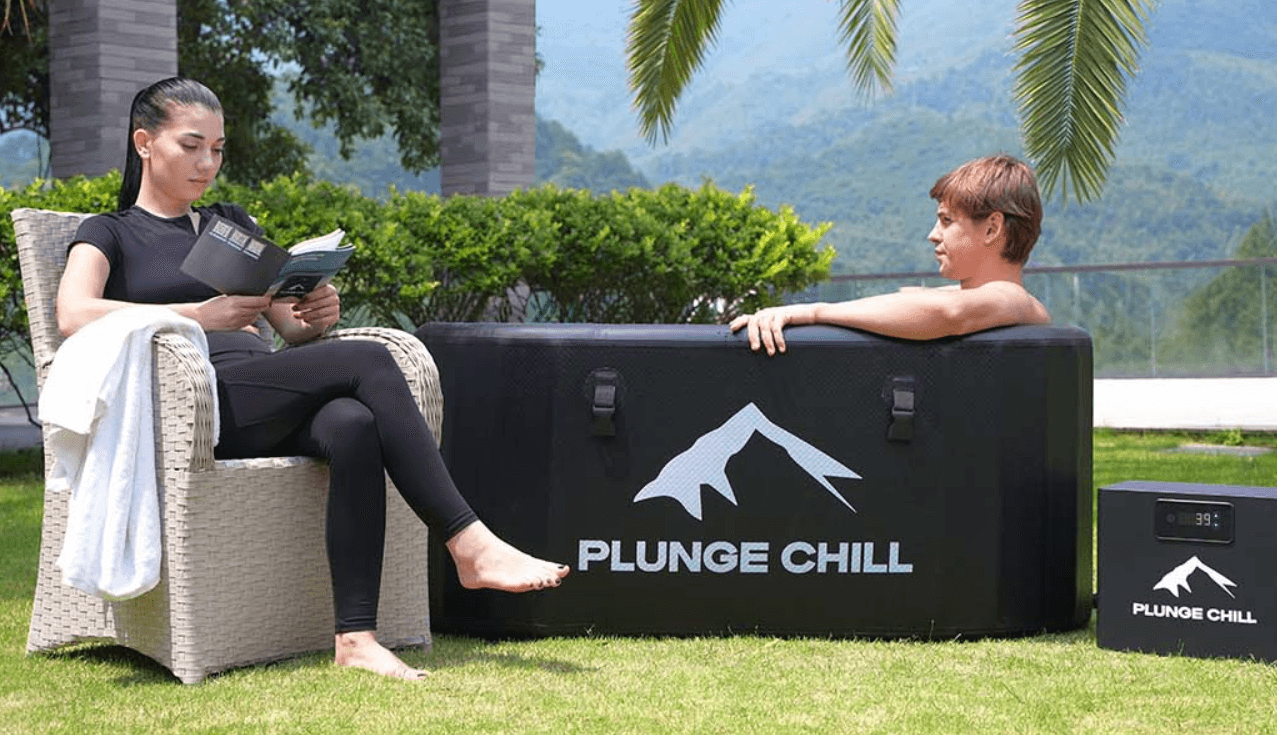
That is where Plunge Chill becomes interesting. Rather than asking every buyer to purchase one expensive fixed system, the brand offers standalone chillers, several tub designs, and bundles that let you build around your available space and desired cooling power. At the time of this review, the 1/3 HP chiller is listed at $499, while complete bundles begin around the mid-$500 range, placing the brand in a much more accessible part of the market than many premium cold plunge systems.
1. Plunge Chill Sits Between Bags of Ice and a Premium Built-In Plunge
The best way to understand Plunge Chill is not as one particular tub. It is better viewed as a modular cold plunge ecosystem. Someone who already owns a suitable tub can buy a chiller. A first-time buyer can choose a compact tub and chiller bundle. Someone who wants more room or stronger cooling can move into the Max, Plus, Pro, or 1 HP configurations instead of replacing the entire concept with a completely different system.
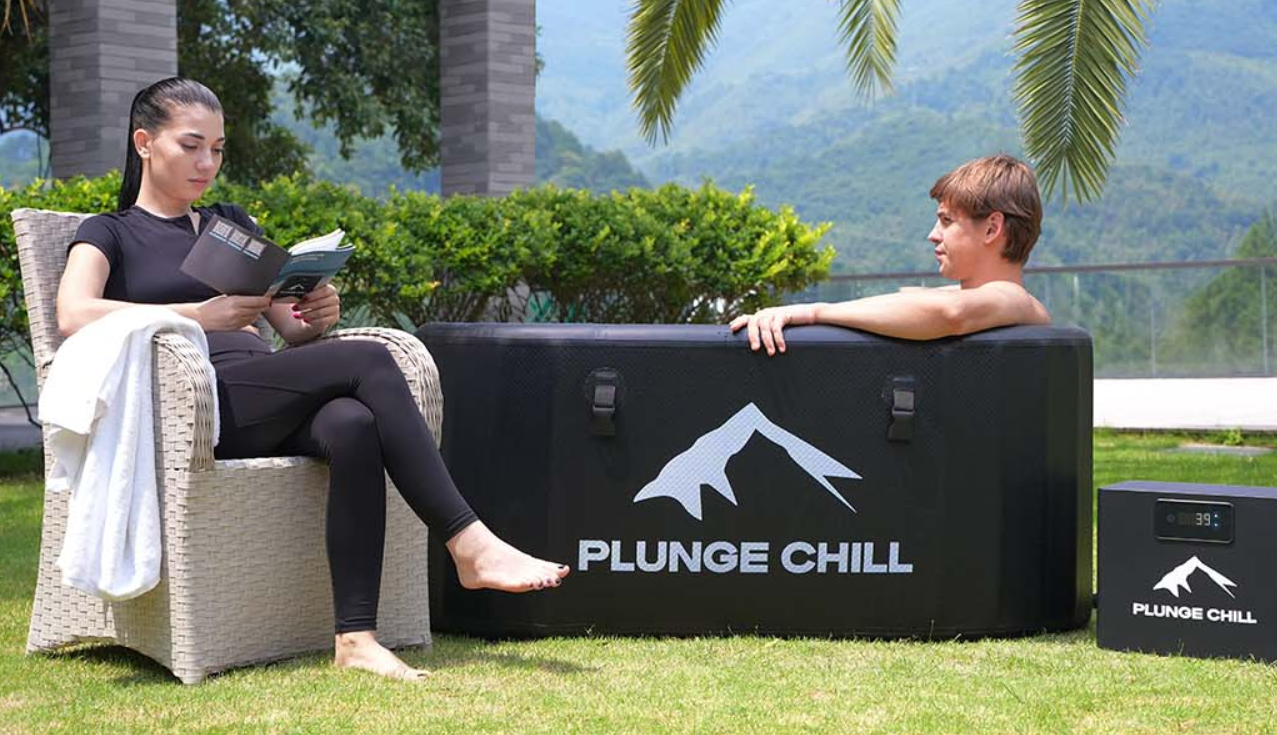
That flexibility is a major part of the value. The current lineup includes a Pod, Max, Plus and Pro alongside 1/3 HP and 1 HP cooling options. Individual tubs are also sold separately, so the product range does not force every customer into the same footprint or budget. Current sale pricing ranges from inexpensive tub-only options to roughly $1,500 for the 1 HP Pro bundle, although promotions can change.
For buyers who already know they enjoy cold immersion, this middle ground makes sense. You are paying primarily for convenience, repeatability, temperature control, and freedom from daily ice runs rather than for a luxury cabinet surrounding the water.
2. The Standard Chiller vs the 1 HP Upgrade: How Much Cooling Power Do You Need
The most important choice in the Plunge Chill lineup may not be the tub at all. It is deciding whether the brand’s standard Cold Plunge Chiller provides enough cooling power for your setup or whether stepping up to the dedicated 1 HP Cold Plunge Chiller makes more sense. Although the standard model is not labeled “1/3 HP” in the collection menu, Plunge Chill specifies that it uses a 1/3 HP, 600W compressor. The company rates it for cooling down to 39°F, with its published 66-gallon test showing water dropping from 75°F to 50°F in roughly 8 to 10 hours and reaching 45°F in around 12 to 14 hours.
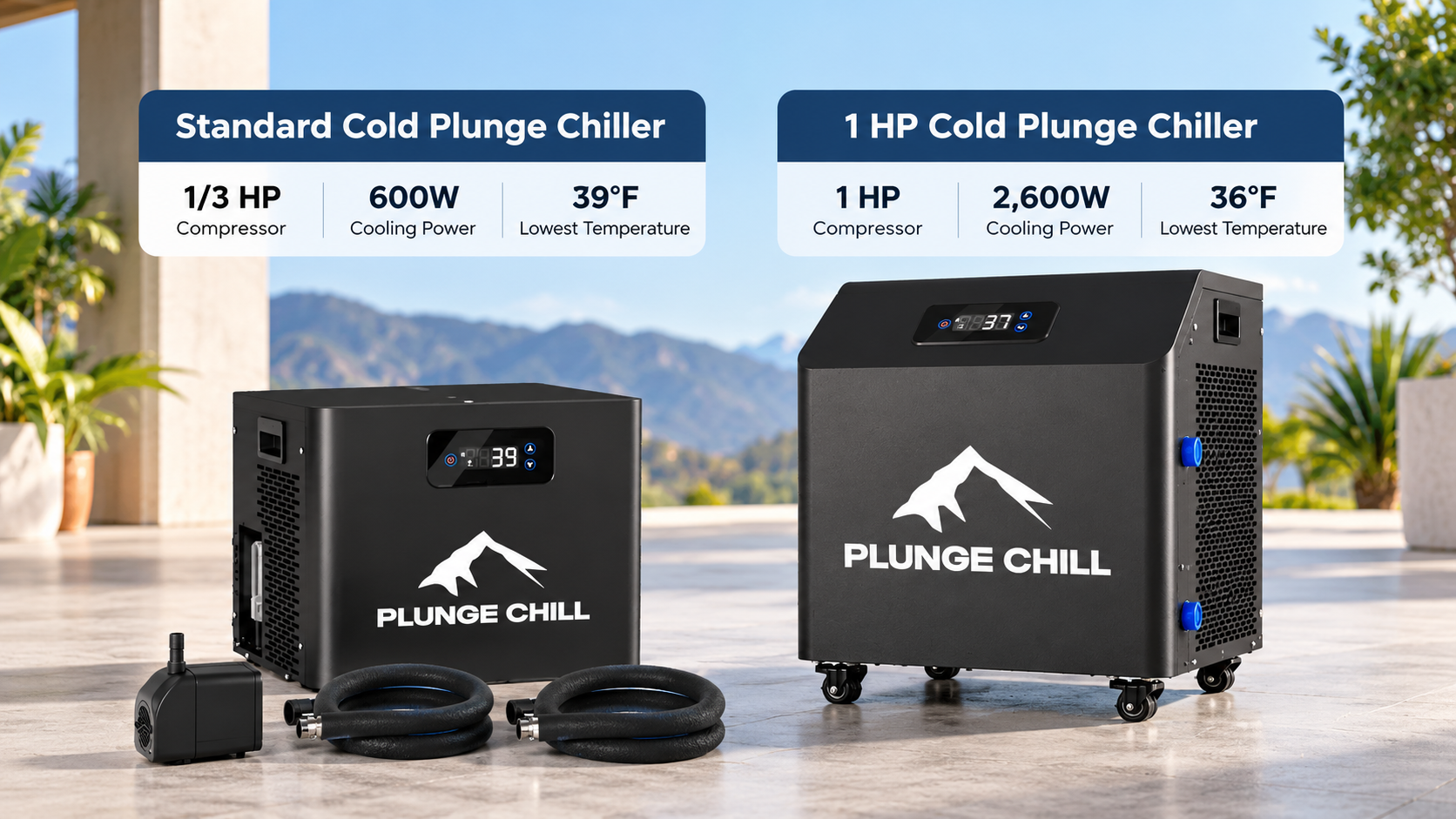
The 1 HP Cold Plunge Chiller is a noticeably more substantial system. Plunge Chill lists up to 2,600W of cooling power, support for up to about 110 gallons, and a minimum temperature of 36°F. Under the brand’s stated test conditions, it can cool 110 gallons from 80°F to 40°F in about eight hours. It also uses a 20-micron inline filtration system and weighs 73 pounds, compared with 35 pounds for the standard chiller.
Those published cooling figures should not be treated as a perfect head-to-head benchmark because Plunge Chill tests the two systems with different water volumes and starting temperatures. The practical distinction is simpler: the standard chiller is the more compact and affordable option for smaller personal setups, while the 1 HP model provides substantially more cooling capacity for larger tubs, hotter environments, or users who want stronger temperature recovery between sessions. Plunge Chill itself frames these two power levels as the main sizing decision in its chiller guide.
For many home users, there is no reason to buy the largest compressor simply because it exists. If the standard Cold Plunge Chiller can maintain your preferred temperature in the tub you choose, its lower price and smaller footprint are meaningful advantages. The 1 HP version becomes much easier to justify when water volume, ambient heat, or frequent use starts pushing the smaller system closer to its limits.
3. Pod, Max, Plus or Pro? Choose Around How You Want to Sit
Tub capacity is useful, but body position matters more than the gallon figure alone. The Pod is a compact upright design rated around 92 gallons. The Max changes the experience with a 47 by 25.5 by 25.5-inch oval layout and a listed 148-gallon capacity, creating considerably more legroom. Plunge Chill specifically positions the Max around an extended plunge rather than the tighter upright posture of the Pod.
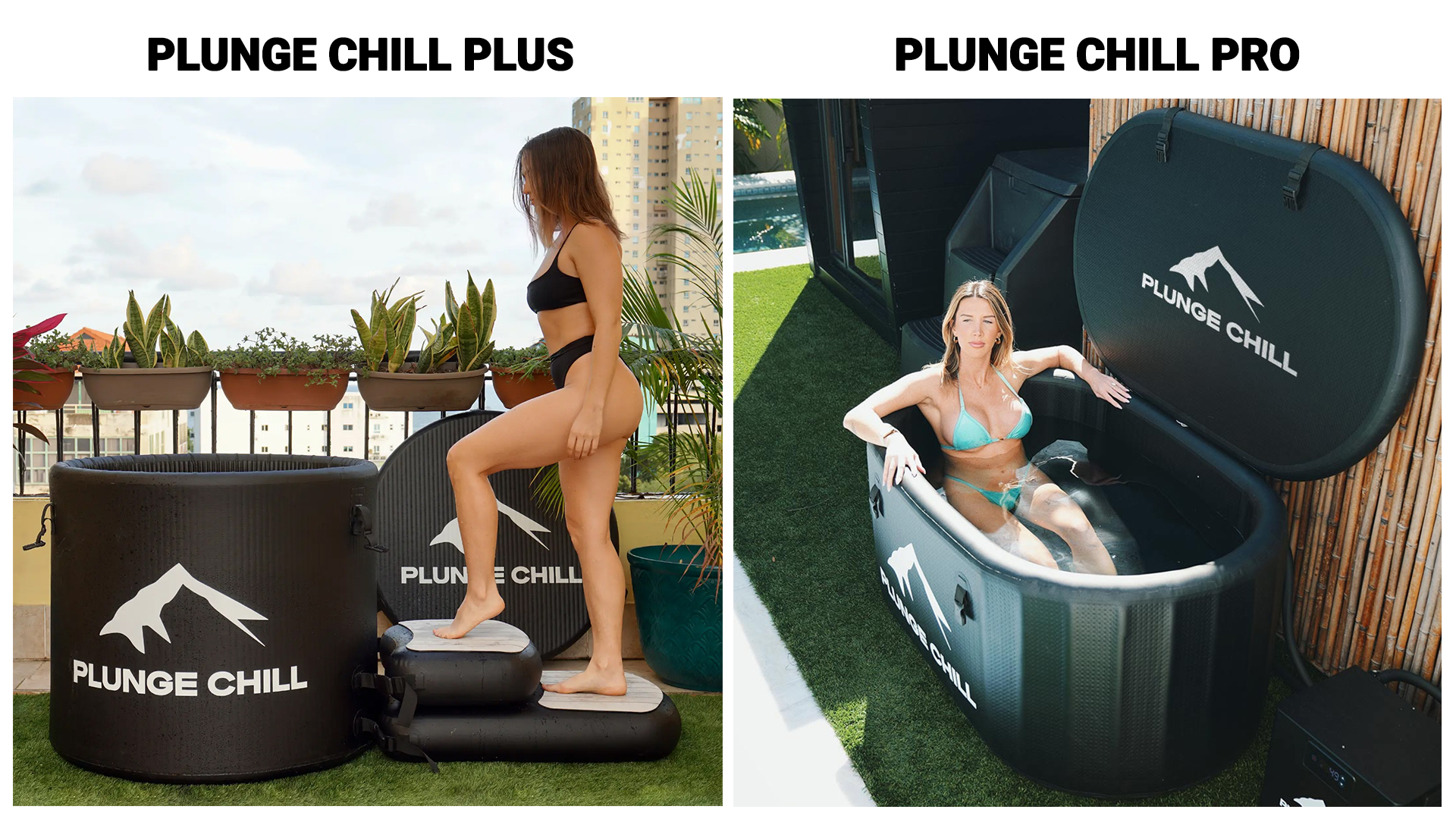
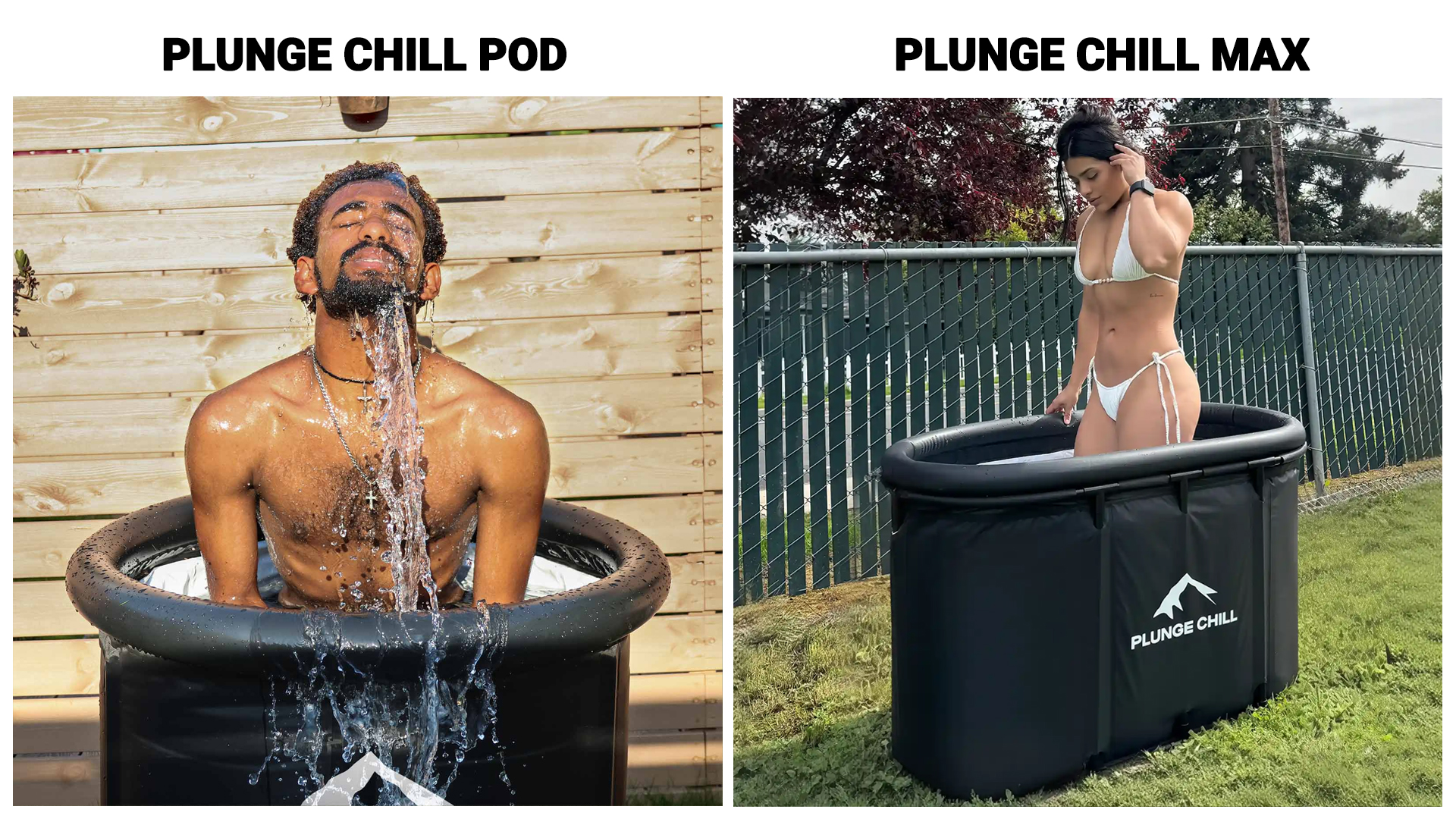
The Plus and Pro move farther toward the substantial home-plunge end of the lineup. The Pro is particularly spacious, measuring 59 by 31.5 by 29.5 inches with a listed 200-gallon total capacity, and Plunge Chill says it can accommodate one user up to 6'9" or two people.
For most solo buyers, bigger is not automatically better. A larger water volume takes more energy to cool and occupies more floor space. The better question is whether you prefer knees tucked into a compact vertical tub or a more relaxed, stretched position. Taller buyers should pay particular attention here, because independent feedback is mostly positive on comfort but includes at least some users wishing their chosen tub allowed deeper shoulder immersion.
4. Setup Is Simple, and Plunge Chill Has a Full Guide for the Details
One of the more approachable parts of the standard Plunge Chill system is that it does not require permanent plumbing. For a compatible tub with ports, the basic setup uses two hoses to create a closed circulation loop: water leaves the tub through the lower connection, passes through the chiller’s built-in pump and filter, and then returns through the upper connection. Once the system is powered on, the display shows the current water temperature and lets you set a target temperature from the control panel.
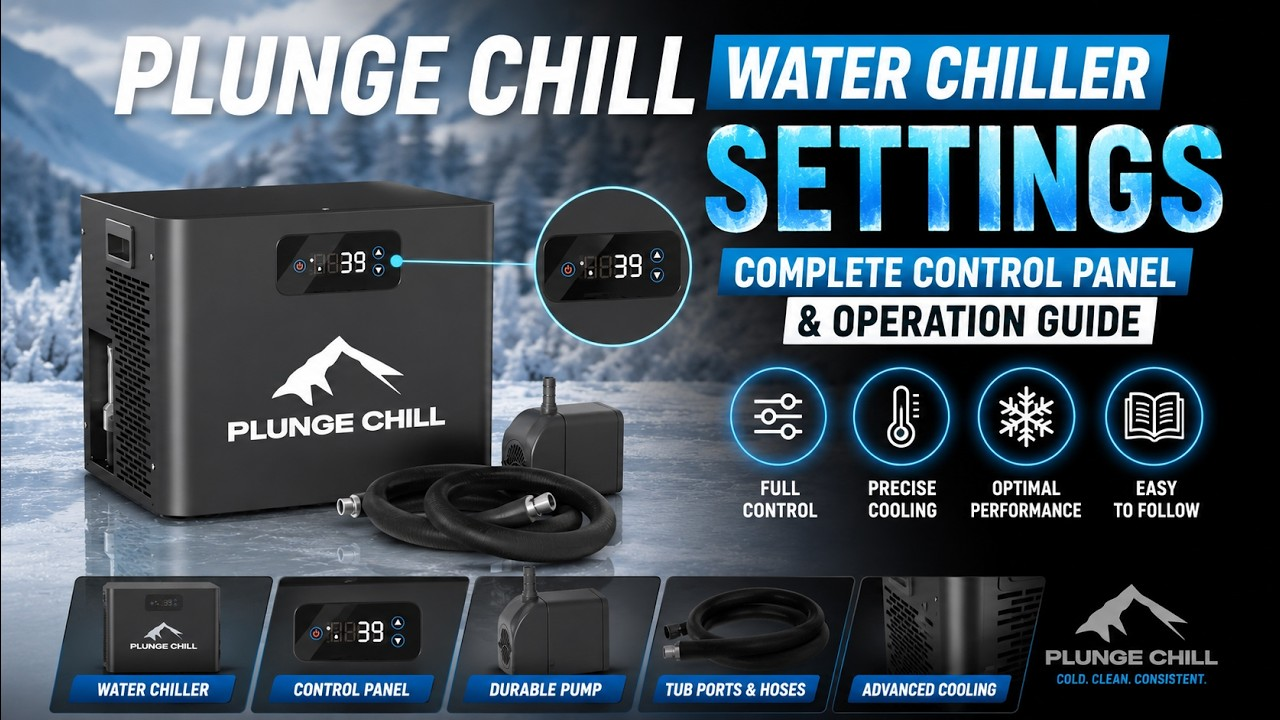
The important distinction is that easy setup does not mean instant cooling. The chiller circulates and gradually cools the existing water, then maintains the selected temperature once it gets there. Plunge Chill also notes that the unit may pause for about three minutes after startup before cooling begins, and recommends keeping hoses free of kinks and placing the chiller in an open, well-ventilated area.
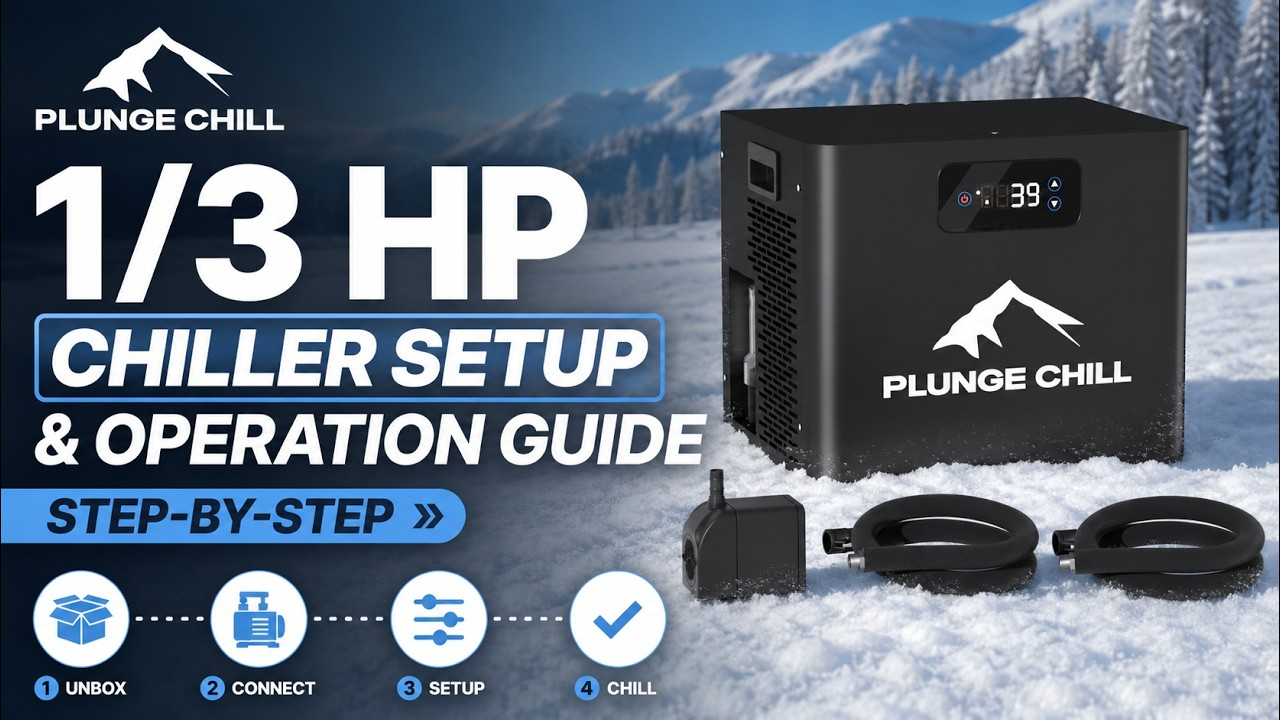
Rather than reproducing every installation step here, buyers can follow Plunge Chill’s official 1/3 HP setup and maintenance guide, which includes video instructions for tubs with ports, standard bathtubs without ports, temperature controls, troubleshooting, and maintenance guidance. For most buyers, that is more useful than trying to learn the entire installation process from a review.
This straightforward setup is part of what makes the system appealing for home use. Once the hoses are connected and the target temperature is set, the chiller is designed to recirculate the water and maintain the selected temperature rather than requiring a fresh load of ice before every session
5. The Ice Bill Disappears, and Maintenance Stays Manageable
Removing bags of ice does not mean a cold plunge becomes completely maintenance-free, but the routine is considerably more manageable once water is continuously circulating. The standard Plunge Chill system already includes a 24/7 circulation pump and built-in mesh filter, which helps catch larger debris as water moves through the chiller. That is a meaningful improvement over a basic tub filled with ice, where stagnant water can require much more frequent draining and cleaning. For regular home use, the goal is not to eliminate maintenance entirely, but to keep the water usable for longer without turning every plunge into a refill-and-scrub session.
A cover also does more work than it may seem. Keeping the tub covered between sessions reduces the leaves, dust, hair, and other debris that eventually reach the filter, while also helping limit heat exchange with the surrounding air. Before getting in, a quick rinse can reduce the amount of sweat, body oil, sunscreen, and cosmetics entering the water. Those small habits matter because they reduce the load on the filtration system and make the overall ownership routine easier.
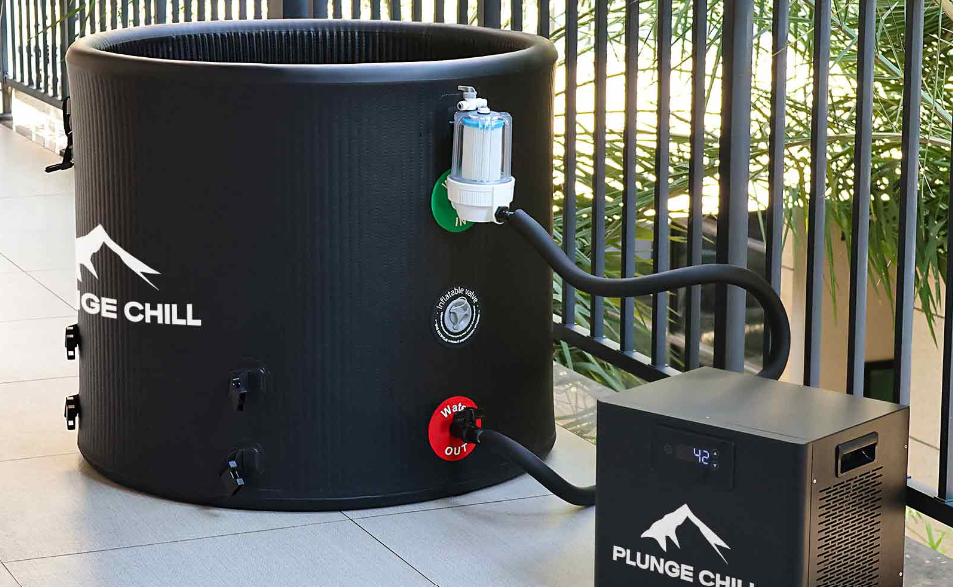
For buyers who want finer filtration than the built-in mesh system, Plunge Chill sells a separate 20-micron Cold Plunge Water Filter Upgrade, currently listed at $49. The kit includes the filter housing, connectors, and three cartridges, and it is designed to fit Plunge Chill chillers as well as many cold plunge systems using standard 1/2-inch fittings. In the recommended flow path, water passes through the chiller and then through the additional filter before returning to the tub, allowing the cartridge to capture finer sediment and particles that would otherwise continue circulating.
The cartridge is a consumable rather than a permanent part. Plunge Chill currently recommends replacement about every four to six weeks, although actual life depends on water quality and how frequently the plunge is used. You do not necessarily need to follow the calendar blindly. Reduced water flow, visibly dirty filter pleats, slower circulation, or water that becomes less clear are practical signs that the cartridge is becoming restricted. The housing also includes an air-release valve, which helps remove trapped air after installation or a filter change so circulation can resume normally.
There is also a good mechanical reason not to neglect filtration. A clogged cartridge can restrict water flow, and Plunge Chill's troubleshooting guidance specifically lists dirty filters, trapped air, bent hoses, and debris around the pump or filter as potential causes of weak circulation. Keeping those components clear helps the chiller move water efficiently rather than forcing the system to work around an avoidable restriction.
So the ownership trade-off still looks favorable. Instead of repeatedly buying and transporting bags of ice, the routine shifts toward covering the tub, keeping obvious debris out, checking circulation, cleaning the tub when needed, and replacing a filter cartridge periodically if you use the upgraded filtration system. Plunge Chill does not remove water care, but it turns it into a predictable maintenance routine rather than something you have to rebuild before every session. For someone who plans to plunge several times a week, that convenience is a significant part of what the chiller is actually buying you.
6. Cold Water Can Help With Soreness, but Recovery Claims Need Context
Cold-water immersion has legitimate research behind it, particularly for post-exercise muscle soreness. A 2022 updated systematic review and meta-analysis covering 44 studies found cold-water immersion superior to control for several immediate and delayed soreness outcomes. A newer 2025 network meta-analysis of 55 randomized trials also reported reductions in delayed-onset muscle soreness with several cold-water immersion protocols.
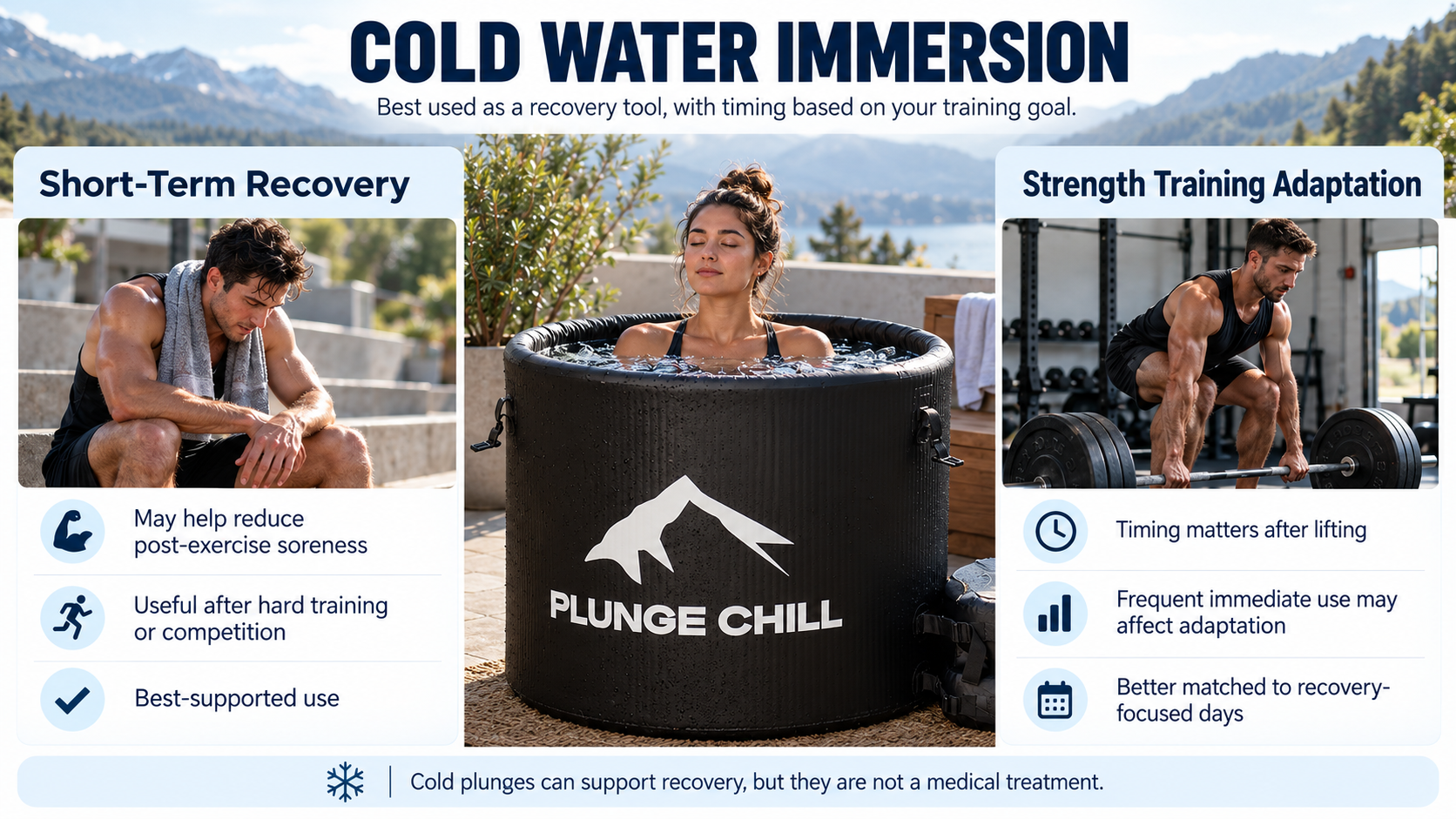
That evidence does not mean every broad wellness claim attached to cold exposure is equally established. If your main goal is acute recovery after hard endurance sessions, competition, or periods of concentrated training, the rationale is clearer. If maximum strength and muscle adaptation are the priority, timing deserves more thought. A meta-analysis of resistance-training studies found that repeated post-exercise cold-water immersion could attenuate some strength gains, although results varied according to how immersion was applied.
So I would treat Plunge Chill as convenient recovery equipment, not as a medical treatment or a guaranteed shortcut to better health. That more realistic positioning still leaves plenty of reason for runners, recreational athletes, and people who simply enjoy cold immersion to value a setup that makes the routine easier to repeat.
7. The Lower Price Reduces One Barrier, and Support Looks Encouraging
Price is one of the strongest arguments in Plunge Chill's favor. Current sale listings show the standard chiller at $499, the Max bundle at $659, the XXL bundle at $899, and the 1 HP Pro system at $1,499. Those figures can change with promotions, but they illustrate why the brand appeals to buyers who want refrigerated water without immediately entering the premium multi-thousand-dollar category.
Independent ownership feedback is also reassuring. Trustpilot currently shows 4.7 out of 5 from 171 reviews, with 89% of ratings at five stars. Common positive themes include easy setup, good cooling performance, quick delivery, and particularly responsive customer support. There are occasional reports involving transit damage, leaks, or parts that needed troubleshooting, but several reviewers also describe replacements or technical help being arranged quickly.
The policy pages deserve a quick read before checkout. Plunge Chill currently offers free mainland U.S. shipping and lists a 30-day return period. Its dedicated warranty page states a two-year usability and performance guarantee, although some FAQ and older product-page copy still says one year. The dedicated return page also uses somewhat stricter condition language than some product pages. These inconsistencies are not a reason to dismiss the brand, but saving the applicable terms when you order is sensible.
8. Which Plunge Chill Setup Makes the Most Sense?
For someone who already owns a tub or stock tank, the standalone 1/3 HP chiller is arguably the most interesting product in the lineup. It removes the recurring ice problem without making you repurchase everything. At the current $499 sale price, it is also a relatively approachable way to find out how much you value temperature-controlled cold immersion.
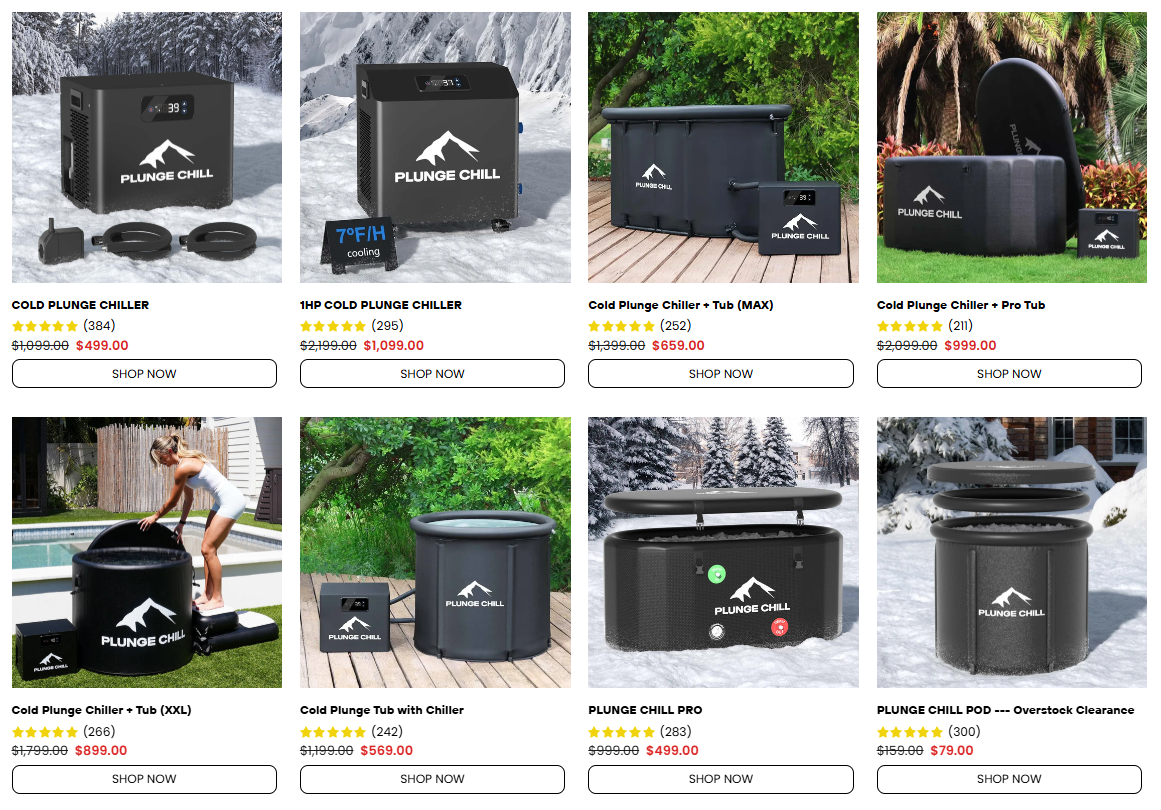
First-time users wanting a complete package will probably find the standard chiller plus Pod or Max more balanced. The Pod saves space, while the Max provides a much more relaxed body position. Buyers in hotter climates, owners of larger tubs, and households expecting frequent use have a stronger reason to consider the 1 HP platform.
There is also a reasonable case for not buying the largest setup immediately. If you have never cold plunged consistently, starting with an affordable tub and ice can confirm that the habit will last. But once ice runs become the reason you skip sessions, the logic behind Plunge Chill becomes much stronger. The brand is at its best when convenience is what turns an occasional cold bath into a repeatable routine.
Build the Plunge Chill Setup Around Your Routine
Plunge Chill does not need to be the fanciest cold plunge on the market to be compelling. Its strength is giving buyers several sensible ways to get reliable refrigerated water at home, from a standalone 1/3 HP chiller through to a much more powerful 1 HP Pro setup.
If that matches what you are looking for, you can check current Plunge Chill pricing and compare the available tub and chiller combinations here. I would choose based first on cooling demand and body position, then on budget. That approach is much more likely to produce a setup you will actually enjoy using than simply buying the biggest model available.
What we like
- Affordable entry point compared with many complete cold plunge systems
- Choice between 1/3 HP and more powerful 1 HP cooling
- Multiple tub shapes for upright or stretched-out immersion
- Built-in circulation and filtration simplify everyday ownership
- Straightforward hose-based setup with no daily bags of ice
- Strong independent feedback for setup, cooling, and customer support
- Standalone chillers make it possible to upgrade an existing tub
What could improve
- Initial cooling still takes hours rather than minutes
- Filters, water care, and periodic cleaning remain part of ownership
- Tub shape and size need to be chosen carefully for taller users
- Warranty wording is not completely consistent across all current site pages
- Return terms are worth checking before extensively using a sale-priced system